You are browsing the archive for Documents.

(U//FOUO) U.S. Army Traffic Control Point Operations Smart Card

February 13, 2013 in U.S. Army

A Center for Army Lessons Learned smart card from 2010 detailing procedures for conducting traffic control point operations.

NATO Legal Deskbook

February 13, 2013 in North Atlantic Treaty Organization

Two re-occurring themes surface in after-action reports from exercises and operations. The first is that NATO Commanders and staffs naturally and increasingly turn to the Legal Advisers to help plan, execute, coordinate, evaluate, and support the assigned mission. The second is that no single doctrinal resource exists in NATO to assist legal practitioners in the fulfilling of this task. Although several Alliance members have produced such guides, before the NATO Legal Deskbook none existed for Legal Advisers and legal personnel assigned to NATO commands. Whether doctrinally ready or not, the Alliance calls upon NATO Legal Advisers and staffs to advise and, often, help direct the execution of the legal component of a mission or mandate. NATO owes these attorneys, paralegals, and legal personnel, who work under often austere and demanding conditions, practical guidance in the form of a comprehensive resource that provides an overview and insight on the legal regime that forms NATO practice. Fulfilling this need is the genesis, purpose and rational for this practitioner‘s guide.

(U//FOUO) New Jersey Fusion Center Phone Kidnapping Scams Report

February 13, 2013 in Intelligence Fusion Centers, New Jersey

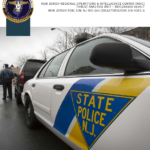
During recent weeks, various sources in law enforcement and media outlets have been reporting phone kidnapping scams occurring in Central and Northern New Jersey and New York. In most incidents, scammers have alleged that a member of the phone scam victim’s family had been involved in a car accident and claimed to have taken the victim’s family member hostage. The scammers then claim they will drop their hostage at a hospital after a certain amount of money (usually $1500‐2000) is wired via Western Union to the scammers, as restitution for damage to the scammer’s vehicle. In addition, the scammers state that they have the hostage’s cell phone and any attempts to call the cell phone or disengage from the conversation will result in the murder or beating of the hostage.

(U//FOUO) DHS-FBI Suspicious Activity Reporting Bulletin: Recruiting

February 12, 2013 in Department of Homeland Security, Federal Bureau of Investigation

Terrorists are attempting to recruit new members in the United States and overseas to support their operations, obtain funding, and conduct terrorist attacks. For example, in May 2012, Maryland-based Mohammad Hassan Khalid pled guilty to attempting to use the Internet to recruit individuals who had the ability to travel to and around Europe to conduct terrorist acts, in addition to providing logistical and financial support to terrorists. In prior cases of recruitment, individuals who were willing to participate in terrorist acts became involved with known and suspected terrorists, participated in paramilitary training abroad, or tried to acquire small arms and build explosives.

Restricted U.S. Army Explosives and Demolitions Manual

February 11, 2013 in U.S. Army

The doctrine of explosives and demolitions focuses on the procedures that support the combat operations provided by engineer capabilities to the combined arms team. This doctrine reduces the effectiveness of barriers, obstacles, infrastructure, and minefields to maintain mobility and momentum in the operating area. Field Manual (FM) 3-34.214 is the reference manual for explosives and demolitions procedures that support combat operations, as well as, peacetime training missions requiring demolition (the destruction of structures, facilities, or material by use of fire, water, explosives, mechanical, or other means) (FM 1-02) applications.

Restricted U.S. Army Air and Missile Defense Operations Manual

February 6, 2013 in U.S. Army

FM 3-01 is the Army Air Defense Artillery’s (ADA) capstone doctrinal publication. The seven chapters that make up this edition of Air and Missile Defense Operations constitute the Army ADA’s view of how it conducts prompt and sustained operations and sets the foundation for developing the other fundamentals and tactics, techniques, and procedures detailed in subordinate field manuals. FM 3-01 also provides operational guidance for commanders and trainers at all echelons.

U.S. Northern Command CONPLAN 3501-08 Defense Support of Civil Authorities (DSCA)

February 5, 2013 in U.S. Northern Command

Natural or man-made disasters and special events can be so demanding that local, tribal) state and non-military federal responders are temporarily overwhelmed by the situation. The Department of Defense (DOD) has a long history of supporting civil authorities in the wake of catastrophic events. When directed by the President or the Secretary of Defense (SecDef), United States Northern Command (USNORTHCOM) will respond quickly and effectively to the requests of civil authorities to save livesj prevent human suffering, and mitigate great property damage. The Joint Strategic Capabilities Plan 2008 (JSCP) directs CDRUSNORTHCOM to prepare a plan to support the employment of Title 10 DOD forces providing Defense Support of Civil Authorities (DSCA) in accordance with (IAW) the National Response Framework (NRF), applicable federal law, DOD Directives (DODD), and other policy guidance including those hazards defined by the National Planning Scenarios that are not addressed by other JSCP tasked plans. DSCA is a subset of DOD civil support that is performed within the parameters of the NRF.

(U//FOUO) New York Fusion Center Threat Assessment: Major Terror Attacks Against Hotels 2002-2011

February 1, 2013 in Intelligence Fusion Centers, New York

This product analyzes major terror attacks on hotels and provides a strategic-level assessment of the groups, tactics, and frequency of global terror attacks against hotels from 2002 – 2011. Additionally, the product identifies the deadliest types of attacks, comparing casualty counts and attack methods. The product was derived from media reporting and unclassified, for official use only sources.

Moynihan Commission on Protecting and Reducing Government Secrecy Report 1997

January 31, 2013 in United States

The classification and personnel security systems are no longer trusted by many inside and outside the Government. It is now almost routine for American officials of unquestioned loyalty to reveal classified information as part of ongoing policy disputes—with one camp “leaking” information in support of a particular view, or to the detriment of another—or in support of settled administration policy. In the process, this degrades public service by giving a huge advantage to the least scrupulous players.

(U//FOUO) New Jersey Fusion Center School Shootings Commonalities Analysis

January 30, 2013 in Intelligence Fusion Centers, New Jersey

This report attempts to analyze the indicators and commonalities of recent school shootings in an effort to inform public safety officials and assist in the detection and prevention of potential school shooter plots or attacks. All incidents included in this assessment occurred in the United States while classes were in session. Domestic violence shootings and gang violence were not included in an effort to differentiate between “active shooter” incidents and other acts of violence. DHS defines an “active shooter” as an individual actively engaged in killing or attempting to kill people in a confined and populated area.

(U//FOUO) New Jersey Fusion Center Mass Shootings Analysis

January 29, 2013 in Intelligence Fusion Centers, New Jersey

This report examines the 29 deadliest mass shootings in the past 13 years, starting with the shootings at Columbine High School in Colorado in 1999, to identify commonalities and trends. These 29 incidents include shooting incidents in which at least five people were killed.

(U//FOUO) U.S. Army Security Procedures for Safeguarding COMSEC Material

January 29, 2013 in U.S. Army

This Technical Bulletin (TB) provides Communications Security (COMSEC) information regarding custodianship of accounts, accounting/reporting procedures, safeguarding material supply procedures, and Controlling Authority (CONAUTH) responsibilities in accordance with (IAW) COMSEC policy set forth in Army Regulation (AR) 380-40.

(U//FOUO) NSA Field Generation and Over-the-Air Distribution of COMSEC Key Manual

January 26, 2013 in National Security Agency

This document is intended as the standard U.S. user’s manual for planning and conducting field key generation and OTAD in support of tactical activities. It is targeted primarily at Joint and Intra-Service Operations and Exercises, particularly those involving forces that do not routinely train or operate together. It also has limited application to Combined operations and exercises involving Allied forces that hold OTAR- and OTAT-capable COMSEC equipment

(U//FOUO) U.S. Army Counterinsurgency Patrolling Handbook

January 24, 2013 in U.S. Army

Patrols are one of the most common operations a unit will perform in the counterinsurgency (COIN) environment. A patrol is the basis for many other types of operations. Cordon and search, reconnaissance, demonstration of force, security, and traffic control checkpoints are all activities a unit may perform while on patrol. Patrols are invaluable in the COIN environment because they enable units to interface with the indigenous population and gain human intelligence.

(U//FOUO) DHS-FBI Suspicious Activity Reporting Bulletin: Testing of Cybersecurity

January 23, 2013 in Department of Homeland Security, Federal Bureau of Investigation

Terrorists or cyber criminals might try to discover vulnerabilities in computer systems by engaging in unauthorized testing of cybersecurity in order to exploit those vulnerabilities during an attack. These attempts might include port scanning, phishing, and password cracking. “Social engineering,” another technique, leverages unwitting insider access by eliciting information about operational and security procedures from employees, personnel, and their associates.

Restricted U.S. Military Multi-Service Tactical Chat Manual

January 22, 2013 in U.S. Air Force, U.S. Army, U.S. Marine Corps, U.S. Navy

This publication provides multi-Service tactics, techniques, and procedures (MTTP) to standardize and describe the use of internet tactical chat (TC) in support of operations. Thus, it provides commanders and their units with guidelines to facilitate coordination and integration of TC when conducting multi-Service and joint force operations.

San Francisco Public Utilities Commission Surveillance Streetlights Request for Participants

January 21, 2013 in California

A request for participants (RFP) issued by the San Francisco Public Utilities Commission on June 8, 2012. The RFP concerns the construction of a wireless control and communications network for managing the city’s planned upgrade to dimmable LED streetlights. The RFP states that future uses for the secure wireless network may include street surveillance, gunshot monitoring, public information broadcasts, electric meter reading and pollution monitoring.

(U//FOUO) U.S. Marine Corps Human Intelligence Exploitation Team (HET) Operations in Iraq Lessons Learned Report

January 19, 2013 in U.S. Marine Corps

HET is viewed as a highly valuable and effective intelligence generating asset which, in conjunction with other intelligence sources, provides a significant amount of actionable intelligence during operations in Iraq. “The HET teams produced more reporting … than any other intel asset we have out there.” “HETs have been the pointy tip of the spear in this counterinsurgency fight. Two-thirds of MNF-W operations are directly driven by HET operations.” Key observations from this collection include the following.

West Point Combating Terrorism Center Report: Understanding America’s Violent Far Right

January 19, 2013 in United States Military Academy

This study provides a conceptual foundation for understanding different far-right groups and then presents the empirical analysis of violent incidents to identify those perpetrating attacks and their associated trends.

NATO Guidance for Developing Maritime Unmanned Systems (MUS) Capability

January 18, 2013 in North Atlantic Treaty Organization

In 2008, recognizing a nascent requirement in the maritime security domain, CJOS COE was requested by NATO Allied Command Transformation (ACT) to provide an overall picture of Maritime Unmanned Systems (MUS) as a potential new capability, with a view to create an increased awareness and trigger further developments within the Alliance. The resulting MUS Study, published in November 2009, was then forwarded for endorsement by ACT, to the International Military Staff (IMS). Following this first document, CJOS COE has produced the attached Guidance document building on the initial study and aiming at supporting NATO MUS capability development.

(U//FOUO) Central California Intelligence Center Exploding Gun Targets Report

January 17, 2013 in California, Intelligence Fusion Centers

The Central California Intelligence Center (CCIC)/Sacramento Regional Threat Assessment Center (RTAC) has prepared the following Situational Information Report on exploding targets, a commercially available binary explosive agent, to provide law enforcement and public safety officials with a better understanding of the potential public safety risks involving its use. While exploding targets are legally permissible depending on state and local regulations, the CCIC is concerned that the mixture may be more dangerous than what is stated on the manufacturer’s website especially if mishandled by individuals with novice experience in handling explosive components or when used in large quantities to detonate bigger targets and, in essence, creating an explosives or incendiary device.

Federal Reserve Discussion Paper on Foreign Banks in U.S.

January 14, 2013 in Federal Reserve

This paper describes the foreign banking landscape in the United States. It begins by establishing a vocabulary for discussion of the subject, and then identifies a number of important data-related issues. With that information in hand, the remainder of the paper focuses on identifying the most important underlying trends on both sides of the balance sheets of foreign-owned banks’ U.S. operations. At each step, the investigation considers how foreign-owned banks compare to U.S.-owned domestic banks, and how two types of foreign banks operations in the U.S. — branches and agencies of foreign banks (FBAs), and foreign-owned subsidiary banks (FSUBs) — compare to each other.

National Institute of Justice Assessment of the Federal Assault Weapons Ban and Gun Violence 1994-2003

January 12, 2013 in Department of Justice, Scholarly

This overview presents key findings and conclusions from a study sponsored by the National Institute of Justice to investigate the effects of the federal assault weapons ban. This study updates prior reports to the National Institute of Justice and the U.S. Congress on the assault weapons legislation.

(U//FOUO) DHS-FBI Bulletin: Recent Active Shooter Incidents Highlight Need for Continued Vigilance

January 10, 2013 in Department of Homeland Security, Federal Bureau of Investigation

This Joint Intelligence Bulletin (JIB) is intended to provide information on the recent active shooter incidents that have taken place in the Homeland. This information is provided to support the activities of DHS and FBI and to assist private sector security officials and federal, state, local, tribal, and territorial law enforcement in identifying protective and support measures relating to active shooters.

(U//FOUO) U.S. Army Special Operations Forces Combat Casualty Care Handbook

January 8, 2013 in U.S. Army

Managing combat trauma on the modern battlefield represents challenges that are scarcely encountered within the civilian community. The advent of tactical combat casualty care (TCCC) represented a fundamental paradigm shift from the care of casualties (CAX) that evolved in the late 1970s. Special operations forces (SOF) engaged in combat operations, removed from conventional forces (CF) and with austere logistical support, represent a set of unique challenges, as well. The limited amount of equipment and medical supplies, coupled with delays in evacuation, add to what is already a frightening experience. Being wounded also generates great fear and anxiety in the CAX. Special operations medics, exposed to hostile fire while caring for CAX, become likely targets, resulting in the special operations medic unintentionally becoming “part of the problem, not the solution” and forcing CAX to care for themselves. The conditions associated with this type of environment demand specialized training for all SOF. We refer to this specialized training as SOF combat casualty care.