October 16, 2012 in North Atlantic Treaty Organization
The Information Environment (IE) comprises the information itself, the individuals, organizations and systems that receive, process and convey the information, and the cognitive, virtual and physical space in which this occurs. This environment has seen significant changes in recent years. The importance of worldwide distributed information, the speed at which information is communicated, the role of social media and the reliability of information systems have created a situation in which no Alliance decision or action can be taken without considering its potential impact on the IE. The ubiquitous nature of information and the potential strategic ramifications of tactical actions add to the challenge faced by NATO Commanders. In this new IE it is more difficult to distinguish between the strategic, operational and tactical levels. The coordination, synchronisation and execution of information activities (IA) that deliberately create desired effects in the IE is essential to the Alliance’s successful functioning in peace, crisis and conflict.
Tags: Information Operations, North Atlantic Treaty Organization, Strategic Communications
October 16, 2012 in North Atlantic Treaty Organization
The purpose of Allied Joint Publication (AJP)-3.10 Allied Joint Doctrine for Information Operations is to explain how Info Ops support the planning, conduct and assessment of operations. The provenance for AJP-3.10 is MC 422/3 NATO Military Policy on Information Operations, which clearly acknowledges the primacy of civil/political direction on information issues and that the policy and subordinate doctrine applies to the military lever of power only. AJP-3.10 is focused on the operational level. It defines and discusses principles of Info Ops, and highlights those particular Info Ops considerations relevant to the conduct of operations, such as the sensitivity to political factors, and the role of non-military entities and emerging technological capabilities in the information environment, both within and external to NATO.
Tags: Information Operations, North Atlantic Treaty Organization, Strategic Communications
October 16, 2012 in Joint Improvised Explosive Device Defeat Organization
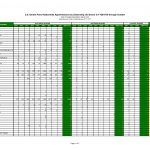
A monthly report from the Joint Improvised Explosive Device Defeat Organization (JIEDDO) detailing IED usage and casualties statistics from every U.S. combatant command for August 2012.
Tags: For Official Use Only, Improvised Explosive Devices
October 11, 2012 in United States
Documentation from the Internet Corporation for Assigned Names and Numbers (ICANN) on suggested amendments to domain registration agreements and due diligence recommendations for ICANN to adopt in accrediting registrars supported by the Australian Federal Police, U.S. Department of Justice, Federal Bureau of Investigation, New Zealand Police, Royal Canadian Mounted Police and Serious Organised Crime Agency.
Tags: Internet Corporation for Assigned Names and Numbers, Privacy
October 11, 2012 in Customs and Border Protection
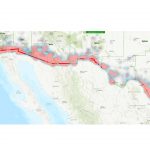
The complete U.S. Customs and Border Protection Security Policy and Procedures handbook from August 2009.
Tags: Customs and Border Protection, For Official Use Only
October 10, 2012 in Afghanistan, Open Source Center
An Open Source Center translation of a decree issued by Hamid Karzai in July 2012 on fighting corruption in Afghanistan.
Tags: Afghanistan, Corruption, Open Source Center
October 10, 2012 in California
A chart from November 2011 depicting members of the Mexican Mafia compiled by the Institutional Gang Investigators at Pelican Bay State Prison, California State Prison – Corcoran and San Quentin.
Tags: California, Mexican Gangs, Mexican Mafia
October 10, 2012 in U.S. Special Operations Command
This directive provides Terms of Reference (TOR) for United States Army Special Operations Command (USASOC); Naval Special Warfare Command (NAVSPECWARCOM); Air Force Special Operations Command (AFSOC), Marine Forces Special Operations Command (MARSOC), Joint Military Information Support Command (JMISC), and Joint Special Operations University (JSOU).
Tags: Special Forces, U.S. Special Operations Command
October 10, 2012 in U.S. Marine Corps
The mission of training and mentoring Afghani police was complicated by (1) the need to establish and occupy nine forward operating bases (FOBs) spread over an area of approximately 28,700 square kilometers, while (2) simultaneously maintaining a level of security that (3) permitted identification of suitable candidates for police and training them, since a police force did not exist yet in the areas in which 2/7 operated and (4) accomplishing this without any established support network. The operational environment was more kinetic and austere than conditions generally experienced by recent veterans of Operation Iraqi Freedom (OIF). Companies and platoons were widely dispersed and follow-on units deploying to such areas in Afghanistan must be prepared to operate in a semi-autonomous manner. Training and organization need to be tailored to those conditions and their specific area of operations (AO), and consideration should be given to the proven utility of the MAGTF in such an environment.
Tags: Afghanistan, For Official Use Only, Marine Corps Center for Lessons Learned, U.S. Marine Corps
October 8, 2012 in Intelligence Fusion Centers, New York
In light of the upcoming 2012 US presidential election, NYSIC is providing a snapshot of four historical cases where terrorists conducted attacks in conjunction with upcoming local or national elections, including the tactics, techniques, and procedures (TTP) used and how the attacks met or failed to meet the terrorists’ goals of altering the outcome of the election.
Tags: Domestic Terrorism, For Official Use Only, Fusion Center, New York, New York State Intelligence Center
October 8, 2012 in Joint Chiefs of Staff
The purpose of operations security (OPSEC) is to reduce the vulnerability of US and multinational forces from successful adversary exploitation of critical information. OPSEC applies to all activities that prepare, sustain, or employ forces. The OPSEC process is a systematic method used to identify, control, and protect critical information and subsequently analyze friendly actions associated with military operations.
Tags: Joint Chiefs of Staff, Operations Security, OPSEC
October 7, 2012 in Joint Chiefs of Staff
Military information support operations (MISO) play an important role in DOD communications efforts through the planned use of directed programs specifically designed to support USG and DOD activities and policies. MISO are planned operations to convey selected information and indicators to foreign audiences to influence their emotions, motives, objective reasoning, and ultimately the behavior of foreign governments, organizations, groups, and individuals in a manner favorable to the originator’s objectives. Military information support (MIS) professionals follow a deliberate process that aligns commander’s objectives with an analysis of the environment; select relevant TAs; develop focused, culturally, and environmentally attuned messages and actions; employ sophisticated media delivery means; and produce observable, measurable behavioral responses.
Tags: Joint Chiefs of Staff, Military Information Support Operations, Propaganda, Psychological Operations
October 7, 2012 in Joint Chiefs of Staff
All modern forces depend on the electromagnetic spectrum (EMS). The military requirement for unimpeded access to, and use of, the EMS is the key focus for joint electromagnetic spectrum operations (JEMSO), both in support of military operations and as the focus of operations themselves. Electronic warfare (EW) is essential for protecting friendly operations and denying adversary operations within the EMS throughout the operational environment.
Tags: Electronic Warfare, Joint Chiefs of Staff
October 7, 2012 in Joint Chiefs of Staff
Specific guidance from the joint force commander (JFC) or higher authority during planning will determine the military deception (MILDEC) role in a joint operation. MILDEC is intended to deter hostile actions, increase the success of friendly defensive actions, or to improve the success of any potential friendly offensive action. Use of MILDEC during any phase of an operation should help to mislead adversaries as to the strength, readiness, locations, and intended missions of friendly forces. In combat situations, the focus is on driving the adversary to culmination and achieving the objectives defined by the JFC. In noncombat situations, the JFC seeks to dominate the situation with decisive operations designed to establish conditions for an early, favorable conclusion.
Tags: Joint Chiefs of Staff, Military Deception
October 4, 2012 in California, Intelligence Fusion Centers
Within the past year, first responders and members of the public have died of asphyxiation, or fallen ill, following accidental inhalation of concentrated carbon dioxide (CO2) gas in public locations. At least two recent incidents are connected with significant gas leaks caused by the failure of liquid CO2 lines connected to beverage dispensers in commercial facilities. Emergency personnel responding to medical or service calls can use signs and symptoms to determine possible CO2 exposure and correspondent risks to first responders.
Tags: For Official Use Only, Fusion Centers, Los Angeles
October 4, 2012 in U.S. Army
This regulation implements DOD 5200.08–R and DODI 3224.03. It prescribes policies, procedures, and guidance to plan and implement the Department of the Army Physical Security Program. It provides guidance concerning requirements for and use of physical security equipment; the appointment of physical security officers and inspectors; the conduct of physical security inspections and surveys; the management of physical security credentials; the management and use of identification cards and badges; restricted areas; access control for installations and stand-alone facilities; and security forces.
Tags: For Official Use Only, U.S. Army
October 3, 2012 in Department of Homeland Security, United States
The Subcommittee investigation found that DHS-assigned detailees to the fusion centers forwarded “intelligence” of uneven quality – oftentimes shoddy, rarely timely, sometimes endangering citizens’ civil liberties and Privacy Act protections, occasionally taken from already-published public sources, and more often than not unrelated to terrorism. Congress directed the Department of Homeland Security (DHS) to lead this initiative. A bipartisan investigation by the Permanent Subcommittee on Investigations has found, however, that DHS’ work with those state and local fusion centers has not produced useful intelligence to support federal counterterrorism efforts.
Tags: Department of Homeland Security, Fusion Centers, Government Surveillance, Privacy, surveill
October 2, 2012 in Department of State
An overview presentation on the U.S. Department of State Operations Center from September 24, 2012.
Tags: State Department
September 30, 2012 in Department of Homeland Security
This Instruction applies throughout DHS regarding the access to and collection, use, maintenance, retention, disclosure, deletion, and destruction of Personally Identifiable Information (PII) in relation to operational use of social media, with the exception of operational use of social media for: (a) communications and outreach with the public authorized by the Office of Public Affairs; (b) situational awareness by the National Operations Center; (c) situational awareness by Components other than the National Operations Center, upon approval by the Chief Privacy Officer following completion of a Social Media Operational Use Template; and (d) the conduct of authorized intelligence activities carried out by the Office of Intelligence and Analysis, the intelligence and counterintelligence elements of the United States Coast Guard, or any other Component performing authorized foreign intelligence or counterintelligence functions, in accordance with the provisions of Executive Order 12333, as amended.
Tags: Department of Homeland Security, Social Media
September 29, 2012 in Department of Homeland Security
The Robotic Aircraft for Public Safety (RAPS) project will invite SUAS vendors to a chosen location and evaluate each system using key performance parameters under a wide variety of simulated but realistic and relevant real-world operational scenarios, such as law enforcement operations, search and rescue, and fire and hazardous material spill response. The SUAS vendors will provide technically mature, flight proven vehicles and their fully-integrated sensors for evaluation. Safety concerns will also be assessed such as the aircraft’s capability for safe flight in the event of a loss of communications between the aircraft and the ground controller.
Tags: Department of Homeland Security, Drones, Small Unmanned Aerial Vehicles
September 29, 2012 in United Nations
A United Nations Office on Drugs and Crime research report from October 2011 that “attempts to shed light on the total amounts likely to be laundered across the globe, as well as the potential attractiveness of various locations to those who launder money” and “examine the magnitude of illicit funds generated by drug trafficking and organized crime.”
Tags: Drug Trafficking, Illicit Financial Flows, Money Laundering, United Nations
September 28, 2012 in National Security Agency
The Department of Defense (DOD) has published the (Final) Environmental Impact Statement (EIS) for the proposed implementation of campus development initiatives and the construction of associated facilities for the National Security Agency (NSA) complex at Fort George G. Meade (Fort Meade), Maryland, dated September, 2010. The National Security Agency/Central Security Service (NSA/CSS) is a cryptologic intelligence agency administered as part of the DOD. It is responsible for the collection and analysis of foreign communications and foreign signals intelligence. For NSA/CSS to continue to lead the Intelligence Community into the next 50 years with state-of-the-art technologies and productivity, its mission elements will require new facilities and infrastructure.
Tags: Cyberwar, National Security Agency, U.S. Cyber Command
September 26, 2012 in Iran, United Nations
Address by Mahmoud Ahmadinejad, President of the Islamic Republic of Iran, before the 67th session of the United Nations General Assembly on September 26, 2012.
Tags: Iran, United Nations
September 25, 2012 in Department of Health and Human Services
A document produced by the Department of Health and Human Services as part of their “Now Trending Challenge” to develop applications for monitoring disease outbreaks via Twitter. The document contains lists of various terms that are associated with a number of diseases from the common cold to diphtheria.
Tags: Department of Health and Human Services, Government Surveillance, Twitter
September 25, 2012 in U.S. Navy
A presentation accompanied a recent demonstration of the Cloak Blade, a micro-copter developed by Johns Hopkins University Applied Physics Laboratory under contract from the U.S. Navy.
Tags: Drones, For Official Use Only, U.S. Navy