April 11, 2013 in Featured
The Department of Defense has issued an instruction clarifying the rules for the involvement of military forces in civilian law enforcement. The instruction establishes “DoD policy, assigns responsibilities, and provides procedures for DoD support to Federal, State, tribal, and local civilian law enforcement agencies, including responses to civil disturbances within the United States.” The new instruction titled “Defense Support of Civilian Law Enforcement Agencies” was released at the end of February, replacing several older directives on military assistance to civilian law enforcement and civil disturbances. The instruction requires that senior DoD officials develop “procedures and issue appropriate direction as necessary for defense support of civilian law enforcement agencies in coordination with the General Counsel of the Department of Defense, and in consultation with the Attorney General of the United States”, including “tasking the DoD Components to plan for and to commit DoD resources in response to requests from civil authorities for [civil disturbance operations].” Military officials are to coordinate with “civilian law enforcement agencies on policies to further DoD cooperation with civilian law enforcement agencies” and the heads of the combatant commands are instructed to issue procedures for “establishing local contact points in subordinate commands for purposes of coordination with Federal, State, tribal, and local civilian law enforcement officials.”
Tags: Civil Disturbance, Civil Support, Defense Support of Civil Authorities, Military Support to Civil Authority, Posse Comitatus
July 6, 2012 in U.S. Army
This lesson is designed to describe the nature and causes of disaffection and social unrest; define the potential for social unrest in the United States; identify the types of confrontations; define crowd behavioral and psychological influences; identify patterns of disorder.
Tags: Civil Disturbance, Military Police, U.S. Army
July 2, 2012 in United States
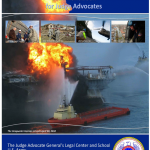
The Domestic Operational Law (DOPLAW) Handbook for Judge Advocates is a product of the Center for Law and Military Operations (CLAMO). Its content is derived from statutes, Executive Orders and Directives, national policy, DoD Directives, joint publications, service regulations and field manuals, and lessons learned by judge advocates and other practitioners throughout federal and state government. This edition includes a substantial revision of Chapter 3, it incorporates new guidance as set for forth Department of Defense Directive 3025.18, Defense Support of Civil Authorities (DSCA), it provides amplifying information on wildfire response, emergency mutual assistance compacts, the role of the National Guard and Army units such as Army North and Joint Task Force—Civil Support, and it discusses the 2010 Deepwater Horizon oil spill.
Tags: Civil Disturbance, Civil Support, Emergency Response, Military Support to Civil Authority
May 7, 2012 in Department of Defense
The President is authorized by the Constitution and laws of the United States to employ the Armed Forces of the United States to suppress insurrections, rebellions, and domestic violence under various conditions and circumstances. Planning and preparedness by the Federal Government and the Department of Defense for civil disturbances are important due to the potential severity of the consequences of such events for the Nation and the population.
Tags: Civil Disturbance, Civil Support, Department of Defense, Military Support to Civil Authority
March 21, 2012 in Headline
The following photos are from March and February of this year and were taken at Joint Base Lewis-McChord, Washington. The first four photos from March depict riot control training for a “domestic quick reaction force” that would aid in civil disturbances. The second set of photos from February depict the 67th Military Police Company that [...]
Tags: Civil Disturbance, Riot Control, U.S. Army
January 2, 2012 in News
An email contained in the latest AntiSec release indicates that law enforcement agencies in New York have been circulating an out-of-date manual that was previously criticized by the ACLU to instruct officers about issues related to Occupy protests. The brief email from December 5, 2011 was circulated to a number of law enforcement agencies affiliated with the Mid Hudson Chiefs of Police Association and contains several document attachments that describe tactics used by protesters, including basic guides on how to conduct your own “Occupy” protest. One of the documents is a police manual titled “Civil Disturbance and Criminal Tactics of Protest Extremists” that describes “illegal” tactics used by protesters and so-called “protest extremists”. The document, which was last revised in 2003, does not list its originating agency or author and is marked with a number of unusual protective markings indicating that it is not intended for public release.
Tags: Civil Disturbance, Civil Unrest, First Amendment, Freedom of Speech, Occupy Wall Street
January 2, 2012 in United States
A manual attached to an email from the latest AntiSec release which has no listed author and little indications as to its source. The introduction states that information in the document “was collected and interpreted by multiple agencies” and the manual is intended for use only by “public safety agencies”. However, a 2003 article from a local newspaper in Colorado indicates that the manual was produced by an unknown U.S. Government agency and is used by Joint Terrorism Task Forces to teach local police about “criminal protest tactics”. According to an email in the most recent AntiSec release, the manual is still being circulated today in relation to police confrontations with Occupy protests.
Tags: Civil Disturbance, Civil Unrest, For Official Use Only
November 29, 2011 in California
In the United States all people have the right of free speech and assembly guaranteed by the First Amendment of the Federal Constitution and California State Constitution. Law enforcement recognizes the right of free speech and actively protects people exercising that right. The rights all people have to march, demonstrate, protest, rally, or perform other First Amendment activities comes with the responsibility to not abuse or violate the civil and property rights of others. The responsibility of law enforcement is to protect the lives and property of all people. Law enforcement should not be biased by the opinions being expressed nor by the race, gender, sexual orientation, physical disabilities, appearances, or affiliation of anyone exercising his/her lawful First Amendment rights. Law enforcement personnel must have the integrity to keep personal, political or religious views from affecting their actions.
Tags: California, Civil Disturbance, Civil Unrest, Crowd Control, Riot Control
November 18, 2011 in California
This Policy is to provide an outline of basic steps to be taken and/or considered by UCPD in the management of campus demonstrations. It is recognized that no policy can completely cover every possible situation and thus we rely on the expertise of the commanders and supervisors to manage the situation utilizing this policy as a guideline. This policy is primarily intended to cover demonstrations on campus and involving primarily University affiliates but many of the elements are applicable to any demonstration. “Demonstration”, for the purposes of this policy, includes a broad range of gatherings. Generally they are events with a significant crowd intending to express a particular point of view to others, often “The University”, and often through highly visible and possibly disruptive means. They are distinguished from peaceful meetings but may spring from them.
Tags: California, Civil Disturbance, Crowd Control, Riot Control, U.C. Berkeley
November 17, 2011 in European Union
This study grew out of the 1997 STOA report, ‘An Appraisal of the Technologies of Political Control’ and takes that work further. Its focus is two fold:(i) to examine the bio-medical effects and the social & political impacts of currently available crowd control weapons in Europe; (ii) to analyse world wide trends and developments including the implications for Europe of a second generation of so called “non-lethal” weapons.
Tags: Civil Disturbance, Civil Unrest, Crowd Control, European Parliament, European Union
November 16, 2011 in News
The National Lawyers Guild and the American Civil Liberties Union of Northern California filed suit on Monday against the Oakland Police Department, and any local agencies assisting them, for its widespread use of excessive force against Occupy Oakland protesters on October 25 and during the night of November 2. That OPD has shown contempt for the rule of law in its violent crackdowns on dissent, and departed dramatically from what the department itself views as best practices for balancing public safety and free speech, is evident from the nature of the lawsuit: the civil rights attorneys are trying to compel OPD to follow its own crowd-control policy.
Tags: Civil Disturbance, Civil Unrest, Oakland, Occupy Oakland, Occupy Wall Street
November 14, 2011 in Department of Homeland Security, Department of Justice
As articulated in the United States Constitution, one of the freedoms guaranteed by the First Amendment is the right of persons and groups to assemble peacefully. Whether demonstrating, counterprotesting, or showing support for a cause, individuals and groups have the right to peacefully gather. Law enforcement, in turn, has the responsibility to ensure public safety while protecting the privacy and associated rights of individuals. To support agencies as they fulfill their public safety responsibilities, the Criminal Intelligence Coordinating Council (CICC) developed this paper to provide guidance and recommendations to law enforcement officers in understanding their role in First Amendment-protected events. This paper is divided into three areas, designed to provide in-depth guidance for law enforcement.
Tags: Civil Disturbance, Department of Justice, First Amendment, Freedom of Speech, Fusion Centers
November 14, 2011 in Department of Justice
This standard establishes minimum performance requirements and methods of test, including safety and handling aspects, for hand -held aerosol tear gas (less -than -lethal) weapons used by law enforcement agencies. These devices are used by law enforcement officers to incapacitate or distract one person or several whose behavior must be modified when the situation is not sufficiently dangerous to require the use of a firearm. The scope of this standard is limited to hand-held tear gas weapons that incorporate ortho-chlorobenzylidene malononitrile (CS) or alpha-chloroacetophenone (CN) as the active agent (lacrimator), sprayed from an aerosol dispenser.
Tags: Civil Disturbance, Civil Unrest, Crowd Control, CS Gas, Department of Justice, Teargas
November 14, 2011 in Department of Justice
Law enforcement officers of the 21st century encounter many of the same challenges and issues their predecessors faced during the late 20th century. Incidents involving hostage rescue, vehicle pursuit, attempted suicide, the need to detain or control unruly individuals and crowds, and domestic disturbances continue to dominate daily activities. However, technology advances have matured, and new tactics provide law enforcement officers with additional options for handling many of these situations. A difficult aspect of civil law enforcement continues to be the need to manage individuals or groups when more than a show of force or voice commands are required and deadly force is neither authorized nor the preferred method of resolution. To meet this need, many Federal and State agencies and local law enforcement departments have developed and used less-lethal technology.
Tags: Civil Disturbance, Civil Unrest, Department of Justice, Less-Lethal Munitions
August 15, 2011 in U.S. Air Force, U.S. Army
Four versions of the U.S. Army and Air Force civil disturbance plan known as Garden Plot from 1968-1991.
Tags: Civil Disturbance, Civil Unrest, Martial Law, U.S. Air Force, U.S. Army
August 15, 2011 in News
Recent unrest in London has sparked media interest in the U.S. military’s plans for civil unrest, including a report from the Atlantic on a little known document called CONPLAN 3502. With economies declining around the world and social unrest spreading throughout the Middle East and even into Western democracies, many wonder what would happen if this sort of unrest and violence were to spread to the United States. Would the response be measured and calm, respecting popular movements and upholding fundamental human rights, or would the response look something more like what is happening in Syria? To understand just what would happen in the event of widespread unrest in the United States, you must first familiarize yourself with CONPLAN 3502, the classified military plan for civil disturbances. A slide from a U.S. Northern Command presentation previously published by this site indicates that CONPLAN 3502 is one of several Contingency Plans (CONPLANs) for domestic U.S. military operations in the event of a disaster, terrorist attack or national security special event (NSSE). Several of the plans deal with Defense Support to Civil Authorities (DSCA) in times of disaster or crisis, including pandemic influenza outbreaks, nuclear and radiological events, as well as chemical weapons attacks. Though, CONPLAN 3502 is unique in that it deals exclusively with support operations conducted with local authorities during times of “civil disturbance”. Because CONPLAN 3502 is classified “Secret”, it has not been released to the public and little is known of its contents. However, through bits of information found in a number of relevant documents, a fairly coherent picture of military civil disturbance planning may be ascertained.
Tags: Civil Disturbance, Civil Support, Civil Unrest, Martial Law, Military Support to Civil Authority, National Guard, Riots, U.S. Northern Command
August 13, 2011 in U.S. Air Force
This manual provides preplanning guidance for handling emergency situations, which include the full spectrum from civil disobedience through hostile disturbances to violent acts of terrorism. It discusses the concept of operations in planning for these crisis situations and offers an outline for preparation, execution and resolution of mass disturbances. Air National Guard units will use this manual as guidance. The use of name or mark of any specific manufacturer, commercial product, commodity or service in this publication does not imply endorsement by the Air Force.
Tags: Civil Disturbance, Civil Support, Civil Unrest, U.S. Air Force
August 12, 2011 in U.S. Army
This regulation prescribes responsibilities, policy, and guidance for the Department of the Army in planning and operations involving the use of Army resources in the control of actual or anticipated civil disturbances. Basic authority is contained in DOD Directive 3025.12, Employment of Military Resources in the Event of Civil Disturbances.
Tags: Civil Disturbance, Civil Support, Civil Unrest, Martial Law, U.S. Army
August 12, 2011 in Department of Defense, U.S. Army, U.S. Northern Command
These template of the Standing Rules for the Use of Force developed by Army North (ARNORTH) and approved by Army Judge Advocate General (JAG) School for commands to follow. The first two templates apply to forces under federal control. The third template is an example State RUF card for National Guard personnel in a SAD or Title 32 status. These templates are taken from the “DoD Defense Support to Civil Authorities Handbook” which includes other information relating to military support operations related to civil disturbances.
Tags: Civil Disturbance, Civil Support, Civil Unrest, Martial Law, Military Support to Civil Authority
December 11, 2010 in U.S. Army
Field Manual (FM) 3-19.15 addresses continental United States (CONUS) and outside continental United States (OCONUS) civil disturbance operations. Today, United States (US) forces are deployed on peacekeeping, peace enforcement, and humanitarian assistance operations worldwide. During these operations, US forces are often faced with unruly and violent crowds intent on disrupting peace and the ability of US forces to maintain peace. Worldwide instability coupled with increasing US military participation in peacekeeping and related operations requires that US forces have access to the most current doctrine and tactics, techniques, and procedures (TTP) necessary to quell riots and restore public order.
Tags: Civil Disturbance, Detention, Martial Law, Military Detention Centers, Military Police, Posse Comitatus, U.S. Army
December 10, 2010 in U.S. Army
Civil disturbances may be riots, violent uprisings, or unlawful actions. As a member of the military forces, you may be ordered under certain conditions to help restore law and order and protect property. The National Guard is likely to face most of the violence during demonstrations. To gain successful control of a civil disturbance, it will require an understanding of the reason for social unrest and basic human behavior patterns. Planning control strategy depends on knowing why people behave as they do. Group behavior sets the scene for civil disturbances. However, it is individual behavior which in the end is the most important.
Tags: Civil Disturbance, Civil Unrest, Martial Law, Military Police, National Guard
December 1, 2010 in United States
The Domestic Operational Law (DOPLAW) Handbook for Judge Advocates is a product of the Center for Law and Military Operations (CLAMO). First published in April of 2001, it was the first of its kind. Designed as a resource for operational lawyers involved in domestic support operations, its publication was indeed timely. After the events of September 11, 2001, and more recently, Hurricanes Katrina in 2005 and Ike in 2008, the Handbook continued to meet a growing need for an understanding of the legal issues inherent in such operations. As with the original publication of the Handbook, this update would not have been possible without the tireless efforts of countless active, reserve, and National Guard judge advocates who participate in these unique operations on an ongoing basis.
Tags: Civil Disturbance, Civil Support, Emergency Response, Military Support to Civil Authority