You are browsing the archive for Drones.

U.S. Drone and Surveillance Flight Bases in Africa Map and Photos

February 23, 2013 in Headline

The following map and photos depict current and future locations used by the U.S. military for launching drones and surveillance flights throughout Central and North Africa. The map is not complete and reflects available information from open sources.  Similar to drone bases in Pakistan, a Washington Post article from 2012 quotes a senior U.S. commander [...]

(U//FOUO) U.S. Army – Marine Corps Unmanned Ground Systems Presentation

November 29, 2012 in U.S. Army, U.S. Marine Corps

Unmanned Ground Systems consist of a powered physical system with no human operator on aboard the principal platform, which can act, either operated remotely or with some degree of autonomy, to accomplish assigned tasks. Unmanned Ground Systems may be mobile or stationary, can be smart learning, self-adaptive, and includes all associated supporting components such as Operator Control Units (OCU).

Seattle Police Department Unmanned Aerial System Operations Draft Manual

November 2, 2012 in Washington

It shall be the mission of those personnel of the Seattle Police Department who are trained in the use of unmanned aerial systems (UAS), to use this resource to protect the lives and property of citizens and first responders in a constitutionally and legally sound manner. Use of an aerial system can be utilized in circumstances which would save life and property, as well as being able to detect possible dangers that could not otherwise be seen.

DHS Robotic Aircraft for Public Safety Request for Information

September 29, 2012 in Department of Homeland Security

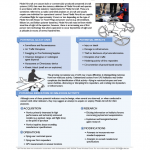
The Robotic Aircraft for Public Safety (RAPS) project will invite SUAS vendors to a chosen location and evaluate each system using key performance parameters under a wide variety of simulated but realistic and relevant real-world operational scenarios, such as law enforcement operations, search and rescue, and fire and hazardous material spill response. The SUAS vendors will provide technically mature, flight proven vehicles and their fully-integrated sensors for evaluation. Safety concerns will also be assessed such as the aircraft’s capability for safe flight in the event of a loss of communications between the aircraft and the ground controller.

(U//FOUO) U.S. Navy Cloak Blade Inherently Stealthy Micro-Copter Presentation

September 25, 2012 in U.S. Navy

A presentation accompanied a recent demonstration of the Cloak Blade, a micro-copter developed by Johns Hopkins University Applied Physics Laboratory under contract from the U.S. Navy.

International Association of Chiefs of Police Recommended Guidelines for Using Drones

September 1, 2012 in United States

Rapid advances in technology have led to the development and increased use of unmanned aircraft. That technology is now making its way into the hands of law enforcement officers nationwide. We also live in a culture that is extremely sensitive to the idea of preventing unnecessary government intrusion into any facet of our lives. Personal rights are cherished and legally protected by the Constitution. Despite their proven effectiveness, concerns about privacy threaten to overshadow the benefits this technology promises to bring to public safety. From enhanced officer safety by exposing unseen dangers, to finding those most vulnerable who may have wandered away from their caregivers, the potential benefits are irrefutable. However, privacy concerns are an issue that must be dealt with effectively if a law enforcement agency expects the public to support the use of UA by their police.

U.S. Army – Marine Corps Ground Robotics Master Plan Version 3

June 27, 2012 in U.S. Army, U.S. Marine Corps

The PM RS JPO initiated development of an integrated GRMP in response to direction from senior Army and Marine Corps leadership in 2005. The GRMP is intended to provide Army and Marine Corps ground robotic stakeholders a common information resource document, as well as a comprehensive plan that links robotic S&T Projects and Acquisition/Contingency Programs to User Current Capability Gaps, Future Capability Gaps, and S&T Shortfalls. The pressing need for reliable ground robotic systems capable of detecting and warning of the presence of hidden improvised explosive devices (IEDs), chemical and biological agents, and related threats to ground troops employed by insurgents in combat zones greatly increases the importance of making every S&T dollar count toward filling critical User capability gaps. In addition, the GRMP provides decision makers a tool for making critical resource decisions.

Why is SOCOM Lying About Domestic Drone Activities?

June 27, 2012 in Featured

A spokesman for U.S. Special Operations Command (USSOCOM) has provided statements to publications in New Hampshire and Oregon indicating that information regarding domestic drone activities provided by Public Intelligence is inaccurate, despite confirmations from the offices of two U.S. Senators. Following our publication last week of a map of current and proposed Department of Defense drone activities within the U.S., several journalists with local publications around the country wrote articles regarding drone activities that were listed in their area. David Brooks of the Nashua Telegraph wrote about the listing of New Hampshire’s Mt. Washington as the site of a USSOCOM drone activity involving small unmanned aerial vehicles including the Raven and Wasp. Corey Pein of the Willamette Week wrote about a planned USSOCOM drone activity in Portland that was listed as utilizing the same types of drones.

DoD Current and Projected Unmanned Aircraft Systems (UAS) Inventory Levels Through 2017

June 15, 2012 in Department of Defense

Several tables displaying the current Department of Defense unmanned aircraft systems (UAS) inventory levels (FY2012 budgeted inventory) and planned inventory through FY2017. The information in the tables was taken from the recent Department of Defense Report to Congress on Future Unmanned Aircraft Systems Training, Operations, and Sustainability.

DoD Report to Congress on Future Unmanned Aircraft Systems Training and Operations

June 15, 2012 in Department of Defense

The Department of Defense (DoD) continues to increase its investment in unmanned aircraft systems (UAS) to meet battlefield commanders’ demand for their unique capabilities. The emphasis on long-endurance, unmanned intelligence, surveillance and reconnaissance (ISR) assets -many with strike capabilities – is a direct reflection of recent operational experience and further Combatant Commander demands. This increase in demand has resulted in a large number of UAS capable of a wide range of missions. This large number of fielded UAS has also driven a strong demand for access within the National Airspace System (NAS). This need for airspace access to test new systems, train operators, and conduct continental United States (CONUS)-based missions has quickly exceeded the current airspace available for military operations. The situation will only be exacerbated as units return from overseas contingencies.

DoD Current and Future U.S. Drone Activities Map

June 12, 2012 in Headline

The following map depicts the approximate locations of current and planned Department of Defense unmanned aircraft systems (UAS) activities inside the U.S.  The locations, service branches, and types of UAS flown were obtained from several publicly released DoD presentations.  If you are aware of other DoD drone activities in the U.S. not listed below, please [...]

NASA Unmanned Aircraft Systems (UAS) Integration in the National Airspace System (NAS) Project

May 30, 2012 in National Aeronautics and Space Administration

A presentation from April 2012 discussing NASA’s Unmanned Aircraft Systems (UAS) Integration in the National Airspace System (NAS) Project which will work to overcome problems integrating drones into the domestic airspace.

DoD Unmanned Aircraft System (UAS) Airspace Integration Plan

May 28, 2012 in Department of Defense

While reliance on UAS continues to grow, the ability to integrate UAS into the National Airspace System (NAS) to support operations, training, and testing has not kept pace. Routine access to exercise and execute Combatant Command (COCOM)-tasked missions, and to support broader military and civil missions such as Homeland Security (HLS), Homeland Defense (HD), and Defense Support of Civil Authorities (DSCA) is necessary. Current NAS access for UAS is greatly limited under interim FAA policies that govern UAS operations in the NAS. Currently, DoD UAS operations conducted outside of Restricted, Warning and Prohibited areas are authorized under a temporary Certificate of Waiver or Authorization (COA) from the Federal Aviation Administration (FAA) or under limited conditions outlined in the 2007 DoD-FAA Memorandum of Agreement (MoA). Although DoD has been able to facilitate a small number of flights through the COA process, DoD has not been able to obtain the level of airspace access necessary to accomplish the wide range of DoD UAS missions at current and projected operational tempos.

Joint Advanced Warfighting School Thesis on Problems Integrating Unmanned Aircraft Systems (UAS) into the National Airspace System

May 28, 2012 in National Defense University

In the last 10 years, the unmanned aircraft system (UAS) has captured the public’s imagination and fascination with their ability to provide instantaneous video feeds of military and covert CIA operations in far away places like Afghanistan and Iraq. The rapid proliferation of the UAS and the eventual redeployment of current systems deployed to Afghanistan and Iraq will require the Federal Aviation Administration (FAA) to provide unrestricted unmanned aircraft access within the National Airspace System (NAS). The Department of Defense (DoD) requires routine access to the NAS to execute directed missions, meet training requirements, and perform necessary testing to meet the Joint Force Commander’s (JFC’s) established mission priorities. Over the past several years, the DoD has been able to execute a small portion of UAS flights in the NAS but current rules and regulation do not facilitate seamless integration with manned aircraft. The purpose of this study is to show that although the DoD and the FAA recognize the importance of integrating manned and unmanned aircraft within the NAS, there are many challenges and gaps that must be bridged to facilitate successful integration. The most important challenge to overcome when integrating manned and unmanned aircraft into the same airspace is safety.

U.S. Air Force Safety Center Unmanned Aircraft Systems (UAS) Mishap Statistics FY1997-FY2011

May 28, 2012 in U.S. Air Force

Several statistics reports on unmanned aircraft systems (UAS) mishaps that are compiled yearly by the Air Force Safety Center. The following reports are the most recent that are publicly available.

Rebuild Your Local Economy With the Drone Industry

May 27, 2012 in Featured

Is your state in need of a growth industry that can employ large numbers of people and contribute to the local economy? You may want to consider the drone industry and that’s just what a number of states around the country have done. Ohio, in particular, has made this a prominent component of their statewide economic strategy, hoping to encourage local economic growth and create jobs by making the state the premier location for drone testing and research in the U.S. To further these efforts, the State of Ohio has worked with several business development groups to create the Ohio Unmanned Aircraft Systems (UAS) Initiative to promote the state’s prominent role in the drone industry. The potential for job growth presented by the Ohio UAS Initiative is highly coveted by a state that has lost more than 369,097 manufacturing jobs in the last decade.

U.S. Joint Planning and Development Office NextGen Unmanned Aircraft Systems R&D Roadmap

May 23, 2012 in United States

This is the first report of progress in producing a NextGen Unmanned Aircraft Systems Research, Development and Demonstration Roadmap (NextGen UAS RD&D Roadmap). The activity was established to enable a responsive, efficient, timely, coordinated multiagency Research and Development (R&D) effort that will enable the U.S. to realize fully the benefits of Unmanned Aircraft Systems (UAS) in the National Airspace System (NAS).

U.S. Army Unmanned Aircraft Systems (UAS) Ground Based Sense and Avoid (GBSAA) Airspace Integration

May 23, 2012 in U.S. Army

Restricted U.S. Army Unmanned Aircraft Systems (UAS) Ground Based Sense and Avoid (GBSAA) Airspace Integration presentation from July 2009.

DoD Unmanned Systems Integrated Roadmap FY2011-2036

May 23, 2012 in Department of Defense

U.S. and allied combat operations continue to highlight the value of unmanned systems in the modern combat environment. Combatant Commanders (CCDRs) and warfighters value the inherent features of unmanned systems, especially their persistence, versatility, and reduced risk to human life. The U.S. military Services are fielding these systems in rapidly increasing numbers across all domains: air, ground, and maritime. Unmanned systems provide diverse capabilities to the joint commander to conduct operations across the range of military operations: environmental sensing and battlespace awareness; chemical, biological, radiological, and nuclear (CBRN) detection; counter-improvised explosive device (C-IED) capabilities; port security; precision targeting; and precision strike. Furthermore, the capabilities provided by these unmanned systems continue to expand.

Lost-Links and Mid-Air Collisions: The Problems With Domestic Drones

April 18, 2012 in Featured

Most of the public discussion surrounding the use of drones both internationally and domestically has focused on issues of privacy or civilian casualties. Due to the technical complexity of drone operations, there has been little media examination of the practical feasibility of widespread domestic drone deployment. In February, the FAA Reauthorization Act of 2012 was signed into law clearing the way for more than 30,000 domestic drones by 2020. The law requires the FAA to create procedures for commercially-operated drones by 2015 and enables law enforcement agencies to operate small-scale drones at low altitudes. While this has a number of negative implications for the right to privacy, such as the lack of any laws governing the usage of data collected via drones, the thought of a future where U.S. skies are filled with an array of drones has a much larger, more practical problem: is it even logistically possible to operate thousands of pilot-less aircraft in the domestic airspace?

(U//FOUO) U.S. Air Force Small Unmanned Aircraft Systems (SUAS) Airpower Lessons from Iraq and Afghanistan

April 13, 2012 in U.S. Air Force

“Enduring Airpower Lessons from Operation ENDURING FREEDOM (OEF) and Operation IRAQI FREEDOM (OIF)” is one of three lessons learned (L2) focus areas directed by the Chief of Staff of the Air Force (CSAF) at CORONA Top 2008. This report is the third and last in a series of Unmanned Aircraft Systems (UAS) L2 reports produced for fiscal year 2009 and focuses on Small UAS (SUAS) capabilities and issues.

DoD Joint Spectrum Center Predator Drone Frequency Analysis Reports

April 12, 2012 in Department of Defense

Several reports from the Department of Defense’s Joint Spectrum Center were originally published in April 2010 by a small blog called DoD Leaks. The blog published less than a dozen documents over a two month span and then ceased all activity. The blog’s description states that it was created in response to Cryptome’s call for more publication of “for official use only” documents that are available in the public sphere. These documents relate to frequency allocation and electromagnetic interference tests conducted in relation to datalinks used by Predator drones.

(U//FOUO) U.S. Army Small Unmanned Aerial Vehicle (SUAV) Airspace Command and Control (A2C2) Handbook

April 11, 2012 in U.S. Army

The purpose of this handbook is to enhance understanding of Army airspace command and control (A2C2) to mitigate risks between small unit unmanned aerial vehicles (SUAVs) and rotary wing operations below the coordinating altitude. This handbook provides leaders at the brigade and below with guidelines in the form of airspace coordination techniques and procedures regarding SUAV mission planning and airspace deconfliction.

Attorney General Eric Holder Speech on Targeted Killing of U.S. Citizens Full Transcript

March 6, 2012 in Department of Justice

These principles do not forbid the use of stealth or technologically advanced weapons. In fact, the use of advanced weapons may help to ensure that the best intelligence is available for planning and carrying out operations, and that the risk of civilian casualties can be minimized or avoided altogether. Some have argued that the President is required to get permission from a federal court before taking action against a United States citizen who is a senior operational leader of al Qaeda or associated forces. This is simply not accurate. “Due process” and “judicial process” are not one and the same, particularly when it comes to national security. The Constitution guarantees due process, not judicial process.

Classified British Drone Plans Stolen in Paris Train Station

February 23, 2012 in Featured

The source said that the theft happened at around 5pm, when the station was packed with cross-Channel travellers. When the Dassault executive returned to a self-service ticket machine after helping his colleague “his briefcase had disappeared”, said the source. “His attention had been purposefully diverted. It was not a random theft. We have to determine whether the thieves were targeting confidential documents on the drone project or other valuables in the briefcase.” The person who hassled the woman disappeared almost immediately, and has not been seen since. He is described as being in his 30s. Whoever took the briefcase was not seen at all.