You are browsing the archive for mexico.

More Than $18 Billion in Cash Smuggled Across U.S.-Mexico Border Each Year

February 13, 2012 in Featured

Jeanette Barraza-Galindo conspicuously left her bags of teddy bears and throw pillows on a bus during an inspection at the Texas-Mexico border — and professed ignorance about the $277,556 officers found hidden inside. The bags were handed to her at a bus station, gifts to be given to a child upon her return to Mexico, she told investigators. The crime she pleaded guilty to — bulk cash smuggling — is increasingly drawing the attention and resources of federal authorities responsible for fighting drug trafficking across the border. Federal immigration authorities say their investigations have yielded more cash seizures and arrests in the past half-dozen years as criminals, sidestepping scrutiny from banks over electronic transfers, resort to using cash to conceal drug trafficking and move money to crime rings in Mexico and elsewhere.

DEA Launders Money for Mexican Drug Cartels

December 5, 2011 in News

Undercover American narcotics agents have laundered or smuggled millions of dollars in drug proceeds as part of Washington’s expanding role in Mexico’s fight against drug cartels, according to current and former federal law enforcement officials.The agents, primarily with the Drug Enforcement Administration, have handled shipments of hundreds of thousands of dollars in illegal cash across borders, those officials said, to identify how criminal organizations move their money, where they keep their assets and, most important, who their leaders are. They said agents had deposited the drug proceeds in accounts designated by traffickers, or in shell accounts set up by agents.

Money Laundering Banks Fuel Mexican Drug Cartels

December 1, 2011 in News

Money launderers for ruthless Mexican drug gangs have long had a formidable ally: international banks. Despite strict rules set by international regulatory bodies that require banks to “know their customer,” make inquiries about the source of large deposits of cash and report suspicious activity, they have failed to do so in a number of high-profile cases and instead have allowed billions in dirty money to be laundered. And those who want to stop cartels from easily moving their money express concern that banks that are caught get off with a slap on the wrist. Banking powerhouse Wachovia Corp. last year agreed to pay $160 million in forfeitures and fines after U.S. federal prosecutors accused it of “willfully” overlooking the suspicious character of more than $420 billion in transactions between the bank and Mexican currency-exchange houses — much of it probably drug money, investigators say.

(U//LES) National Drug Intelligence Center: Mexican Drug Cartels Operating Within U.S. Cities

October 31, 2011 in Department of Justice

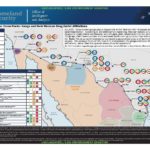
The National Drug Intelligence Center (NDIC) assesses with high confidence that in 2009, Mexican drug trafficking organizations (DTOs) were operating in the United States in at least 1,286 cities spanning all nine Organized Crime Drug Enforcement Task Force (OCDETF) regions, based on law enforcement reporting. Moreover, NDIC assesses with high confidence that Mexican DTOs in at least 143 of these U.S. cities were linked to a specific Mexican Cartel or DTO based in Mexico—the Sinaloa Cartel (at least 75 cities), the Gulf Cartel/Los Zetas (at least 37 cities), the Juárez Cartel (at least 33 cities), the Beltrán-Leyva DTO (at least 30 cities), La Familia Michoacán (at least 27 cities), or the Tijuana Cartel (at least 21 cities). NDIC assesses with high confidence that Mexican DTOs will further expand their drug trafficking operations in the United States in the near term, particularly in the New England, New York/New Jersey, Mid-Atlantic, and Florida/Caribbean Regions. NDIC also believes that Mexican DTOs will maintain the present high level of availability for heroin, marijuana, and methamphetamine because the conditions in Mexico and in the United States that enabled and motivated the DTOs to increase production and availability of those drugs have not significantly changed.

Mexico City Opens “C4I4″ Public-Surveillance Intelligence Center

October 31, 2011 in News

There are 13,000 surveillance cameras dispersed across this megalopolis, capturing everything in view, in real time and around the clock. The cameras peek at streets and people from the tops of light poles, inside buses and over subway platforms, watching in the name of public safety. The local government, headed by Mayor Marcelo Ebrard, this week unveiled an intelligence center where all these video feeds are monitored. It is a state-of-the-art “integrated” hub with a name that sounds like a futuristic space vessel: the C4I4. Speaking inside the building’s circular nerve center — where 600 video screens carried scenes of residential streets and choked intersections — Ebrard told reporters that the C4I4 is one of the largest and most advanced public-safety command centers in the world.

Mexican Drug Cartels Using Increasingly Brutal Tactics to Shock Rivals and Authorities

October 9, 2011 in News

Masked gunmen dump the bodies of 35 murder victims during rush hour as terrified motorists watch and tweet friends to avoid the avenue in a coastal city. A couple of weeks later, 32 more corpses are found nearby in three houses. A woman’s decapitated body is left at a border city’s monument to Columbus, the head atop a computer keyboard with a sign saying she was killed for blogging about drug traffickers. The severed heads of five men are dumped outside an elementary school in Acapulco, and two more near a military base in Mexico City days later. That was just in the past three weeks.

White House ATF Fast and Furious Emails and Documents

October 4, 2011 in Bureau of Alcohol Tobacco Firearms and Explosives, White House

Emails and documents related to the ongoing investigation of the Bureau of Alcohol, Tobacco, Firearms and Explosives’ “Fast and Furious”/Project Gun Runner program leaked to CBS. Includes a map of distribution routes for weapons involved in the program leading to locations throughout Mexico.

(U//FOUO/LES) Mexican Drug Cartels Using Improvised Grenades

September 3, 2011 in Texas

Over the last few years, it has become more commonplace to see military-type weaponry such as grenades and assault rifles utilized by Mexican drug trafficking organizations (DTOs). Increasingly, many of the reported hand grenade seizures in United States are illegal, improvised grenades destined for Mexico and the DTOs. These devices have become a weapon of choice for Mexican DTOs because they are cheap, the components are relatively easy to obtain and manufacture, are easily concealable, and can kill or injure large numbers of people indiscriminately. Reports have indicated that grenade attacks originated mostly in southern Mexico around the beginning of President Felipe Calderon’s presidency in 2006, and have steadily spread northward as the conflicts between rival DTO cartels, and Mexican government’s enforcement efforts have intensified in the northern Mexican Border States.

U.S. Special Forces Training Mexican Assassination Squads to Battle Cartels

September 2, 2011 in News

A small but growing proxy war is underway in Mexico pitting US-assisted assassin teams composed of elite Mexican special operations soldiers against the leadership of an emerging cadre of independent drug organizations that are far more ruthless than the old-guard Mexican “cartels” that gave birth to them. These Mexican assassin teams now in the field for at least half a year, sources tell Narco News, are supported by a sophisticated US intelligence network composed of CIA and civilian US military operatives as well as covert special-forces soldiers under Pentagon command — which are helping to identify targets for the Mexican hit teams. Evidence of this intelligence support network has surfaced recently even in mainstream media reports, in outlets such as the New York Times and the Mexican publication El Universal — the former reporting that “CIA operatives and American civilian military employees have been posted at a Mexican military base,” and the latter reporting that elite US and Mexican troops engaged in joint training exercises in Colorado earlier this year.

Top Drug Trafficker Claims U.S. Government Made Agreement to Protect Sinaloa Cartel

August 1, 2011 in News

The son of a heavy hitter in a powerful Mexican drug trafficking organization has filed explosive legal pleadings in federal court in Chicago accusing the US government of cutting a deal with the the “Sinaloa Cartel” that gave its leadership “carte blanche to continue to smuggle tons of illicit drugs into Chicago and the rest of the United States.” The source of that allegation is Jesus Vicente Zambada Niebla, the son of Ismael “El Mayo” Zambada Garcia — one of the purported top leaders of the Sinaloa drug-trafficking organization — a major Mexican-based importer of weapons and exporter of drugs.

(U//FOUO) CBP Killing or Capturing Cartel Leaders Has No Effect on Drug Trafficking

July 13, 2011 in Customs and Border Protection

CBP BorderStat drug seizure information was used to evaluate seizure statistics in relation to the arrest or death of key DTO personnel. The drug seizure data was collected from January 2009 through January 2010. This data was analyzed to determine if the arrest or death of key personnel had a direct impact on the flow of U.S.-bound drugs. This research indicates that there is no perceptible pattern that correlates either a decrease or increase in drug seizures due to the removal of key DTO personnel.

(U//FOUO) LulzSec Release: Arizona Police Say Hezbollah is in Mexico

July 6, 2011 in Arizona

Literally meaning “Party of God”, Hezbollah began as a militia in 1982 in response to the Israeli invasion of Lebanon. The Shi’a Islamist organization has since grown into a worldwide political and paramilitary network with seats in the Lebanese government, numerous social services programs, long-standing ties with the Syrian and Iranian governments, and an annual income estimated to be anywhere between $200-$400 million. Hezbollah’s main goal is to cast out any form of Israeli rule and/or occupation. Due to the U.S.’ political and financial support of Israel, Hezbollah regards our nation as a viable target. While there is no immediate or confirmed threat to the Tucson area, recent events and the current middleeastern political arena merit a renewed awareness of the group’s capabilities and presence throughout the Western Hemisphere.

(U//FOUO/LES) LulzSec Release: San Diego Cross-Border Kidnapping Threat Assessment

June 25, 2011 in California, Intelligence Fusion Centers

The San Diego Law Enforcement Center (SD-LECC) convened an analytical task force in Spring 2010 to address the question: “What does cross-border kidnapping in San Diego look like?” Intelligence Analysts from Chula Vista Police Department, San Diego Sheriff’s Department, the Federal Bureau of Investigation, and the Department of Homeland Security’s Office of Intelligence and Analysis analyzed statistical, investigative and open source intelligence from local law enforcement agencies, FBI, DHS, ICE, CBP, DEA and the U.S. Department of State Bureau of Consular Affairs to prepare this assessment. There is strong evidence—based on intelligence gathered from traditional and alternative sources, such as banks, hospitals, citizen interviews, wiretaps and private consulting firms—that kidnappings in the San Diego area are widely underreported. Consequently, this assessment offers a strategic baseline only; there is insufficient data to support a definitive study of cross-border kidnapping tactics and techniques. This assessment is intended to support law enforcement executives and practitioners in their efforts to collect additional information and combat this problem.

(U//FOUO) LulzSec Release: DHS Sinaloa Drug Cartel Reference Guide

June 24, 2011 in Department of Homeland Security

The powerful confederation of Mexican DTOs known as the Sinaloa cartel controls the majority of Mexico’s marijuana and methamphetamine production and distribution, as well as cocaine trafficking from South and Central American producers into the United States across the U.S. southwest border. The Sinaloa cartel conducts business with powerful U.S. gangs that largely control local drug distribution. As one of the most powerful cartels operating in Mexico, it has expanded operations throughout western Mexico and attempted to take control of new plazas from weaker organizations.* Arrests of high-level members have not fractured the cartel or caused infighting—as was the case with several of its rivals—likely because of the cartel’s stable revenue sources, decentralized structure, family-based culture, and geographic breadth, which all contribute to its preeminence.

(U//FOUO/LES) LulzSec Release: DHS Mexico Sonora-Based Threats to U.S. Border Security

June 24, 2011 in Department of Homeland Security

This Homeland Security Assessment examines threats to U.S. border security emanating from the Mexican state of Sonora, which borders Arizona and a small section of New Mexico. It discusses drug and alien smuggling, border violence, and Mexican federal, state, and local government capabilities to confront organized crime. This is the fifth of six planned assessments on current threats to homeland security arising in Mexican states along the U.S. border. It is intended primarily for working-level analysts and operators engaging in homeland security-related activities and concerned with pertinent developments in Sonora and nearby U.S. territory.

Mexican Drug Cartels Bribe Border Patrol Agents with Sex, Use Female Assassins, Kidnap People for Gladiator Knife Fights

June 13, 2011 in News

The elderly are killed. Young women are raped. And able-bodied men are given hammers, machetes and sticks and forced to fight to the death. In one of the most chilling revelations yet about the violence in Mexico, a drug cartel-connected trafficker claims fellow gangsters have kidnapped highway bus passengers and forced them into gladiatorlike fights to groom fresh assassins. In an in-person interview arranged by intermediaries on the condition that neither his name nor the location of his Texas visit be published, the trafficker also admitted to helping push cocaine worth $5 million to $10 million a month into the United States.

U.S. Banks Increasingly Involved in Money Laundering for Mexican Drug Cartels

May 20, 2011 in News

If I told you that while the United States is engaged in a costly war against illegal drugs and the vicious cartels that traffic them, U.S. banks are willfully flouting U.S. and Mexican laws and helping these cartels launder their money , would you believe me? For decades the U.S. has served as a safe haven for the ill-gotten finances of corrupt foreign leaders and their ilk. Former foreign government ministers, military leaders, and corrupt heads of state have mansions, businesses, and bank accounts here. The banks who facilitate much of these activities are required by law to conduct “due diligence” in determining the source of funds for these “politically exposed persons,” but compliance is spotty.

ATF Operation Helped Supply Mexican Drug Cartels With Weapons

March 4, 2011 in News

A federal operation that allowed weapons from the U.S. to pass into the hands of suspected gun smugglers so they could be traced to the higher echelons of Mexican drug cartels has lost track of hundreds of firearms, many of which have been linked to crimes, including the fatal shooting of a Border Patrol agent in December. The investigation, known as Operation Fast and Furious, was conducted even though U.S. authorities suspected that some of the weapons might be used in crimes, according to a variety of federal agents who voiced anguished objections to the operation. Many of the weapons have spread across the most violence-torn states in Mexico, with at least 195 linked to some form of crime or law enforcement action, according to documents obtained by the Center for Public Integrity and The Times.

Mexico’s Drug Trafficking Organizations: Source and Scope of the Rising Violence

February 4, 2011 in Congressional Research Service

In Mexico, the violence generated by drug trafficking organizations (DTOs) in recent years has been, according to some, unprecedented. In 2006, Mexico’s newly elected President Felipe Calderón launched an aggressive campaign—an initiative that has defined his administration— against the DTOs that has been met with a violent response from the DTOs. Government enforcement efforts have had successes in removing some of the key leaders in all of the seven major DTOs. However, these efforts have led to violent succession struggles within the DTOs themselves. In July 2010, the Mexican government announced that more than 28,000 people had been killed in drug trafficking-related violence since December 2006, when President Calderón came to office.

Drug War Violence Expands in Acapulco: 31 Dead in 4 Days

January 10, 2011 in News

The body of a murdered man was found Monday on the main highway to Acapulco, bringing to 31 the number of people killed in the Pacific resort city over four days. The unidentified man was shot several times in the head and found under a pedestrian bridge with his shirt pulled over his face, said Fernando Monreal Leyva, director of the investigative police for Guerrero state, where Acapulco is located. Leyva said federal, state and local police planned to meet Monday with the military to consider ways to beef up security in Acapulco, where 14 decapitated men and two police officers were among the unusually high body count since Friday evening.

More Than 12,000 Killed This Year in Mexican Drug War

December 17, 2010 in News

More than 12,000 people have died this year in Mexico’s drug war, officials said Thursday, making it the deadliest year since President Felipe Calderon launched a government crackdown against traffickers in 2006. The federal attorney general’s office said 12,456 people were killed through Nov. 30. The overall death toll since the launch of the drug war stands at 30,196, according to figures given to reporters during a year-end breakfast session with Atty. Gen. Arturo Chavez Chavez. But that figure appeared to underestimate the toll. Federal officials announced in August that 28,228 had been killed in the war, meaning the death rate would have to have slowed considerably since then. But there has been no sign of easing violence as cartels have remained locked in fierce turf battles that have most contributed to the rising toll.

(U//FOUO) Open Source Center Mexico YouTube Drug War

December 15, 2010 in Mexico, Open Source Center

Postings of popular songs about drug traffickers are the most prevalent cartel-related content found in YouTube, the third most-visited social networking website in Mexico. Direct threats among cartels are less prevalent but hold a significant following, while videos honoring police killed in action register a low viewing record. Some sectors of Mexican society have also turned to the video-sharing site to express their anger at the violence brought by the ongoing drug war.

Gunmen Massacre 15-Year-Old’s Birthday Party in Ciudad Juarez

October 24, 2010 in News

Gunmen stormed a birthday party in embattled Ciudad Juarez and killed 13 young people, the latest outrage in a city crippled by warring drug gangs. State Attorney General Carlos Salas told reporters at a news conference at the crime scene that the dead ranged in age from 13 to 32 and included six women and girls. A dozen people were wounded in the attack late Friday in a lower-middle-class barrio of Juarez. Salas said that investigators found 70 bullet casings at the scene and that the attackers escaped. He offered no possible motive.

(U//FOUO) Texas-Mexico Border Security Carnage Update

October 18, 2010 in Mexico, Texas

(U//FOUO) Texas-Mexico Border Security Carnage Update, July 2010.

(U//LES) ATF Project Gunrunner Mexican Cartel Strategy

September 28, 2010 in Bureau of Alcohol Tobacco Firearms and Explosives

Based on the areas in Mexico controlled by the Gulf, Zetas, and Sinaloa cartels; the locations of U.S.-sourced firearm recoveries in Mexico; and the U.S. locations where firearms recovered in Mexico are most often acquired, the Houston and Phoenix Field Divisions will be primarily responsible for investigating trafficking schemes associated with these cartels. However, this strategy is not intended to limit the initiative of any ATF field division and in fact recognizes the increasingly important role played by non-Southwest border field divisions in combating firearms and explosives trafficking to Mexico. As a result, all ATF field divisions are expected to initiate investigations on cartels and/or their surrogates operating in their geographic areas of responsibility; however, investigations pertaining to the Gulf, Zetas, and Sinaloa cartels must be deconflicted and closely coordinated with the Houston and Phoenix Field Divisions.