The following photos were released by the DoD and NATO over the last month. See also:
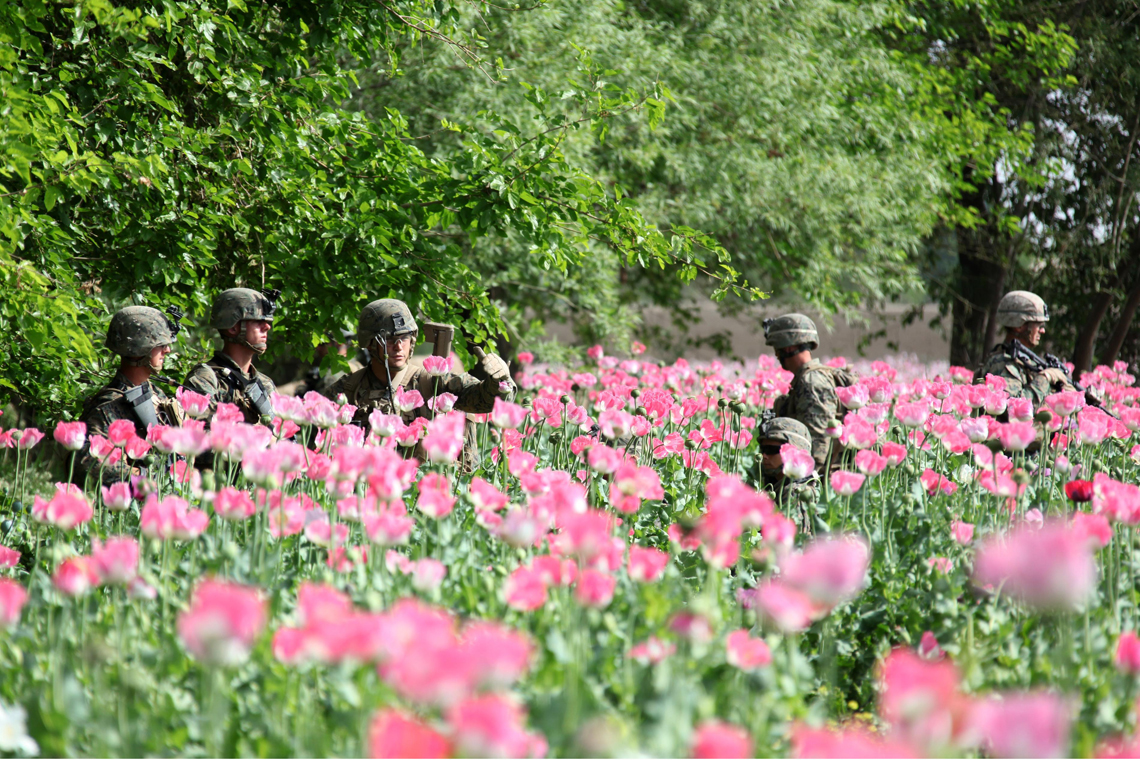
U.S. Marine Corps Sgt. Eric Stump (3rd from left), a squad leader with with 1st Platoon, Company I, Battalion Landing Team 3/8, Regimental Combat Team 8, and his U.S. Marines discuss their route through a poppy field during a security patrol from their patrol base in Helmand province's Green Zone, west of the Nahr-e Saraj canal, April 13. Elements of 26th Marine Expeditionary Unit deployed to Afghanistan to provide regional security in Helmand province in support of the International Security Assistance Force.
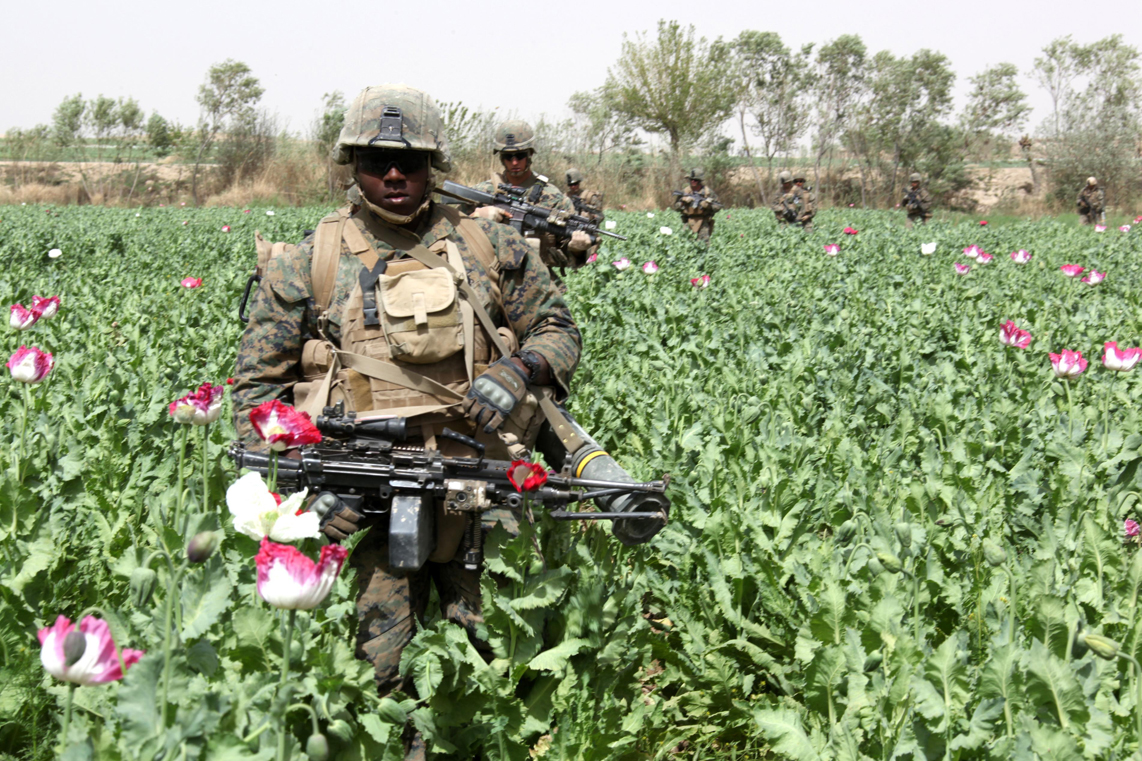
U.S. Marine Corps Lance Cpl. Antonio Wilccoxen, an M249 Squad Automatic Weapon gunner, and fellow U.S. Marines with 1st Platoon, Company I, Battalion Landing Team 3/8, Regimental Combat Team 8, walk through a poppy field during a security patrol from their patrol base in Helmand province's Green Zone, west of the Nar-e Saraj canal, March 31. Elements of 26th Marine Expeditionary Unit deployed to Afghanistan to provide regional security in Helmand province in support of the International Security Assistance Force.
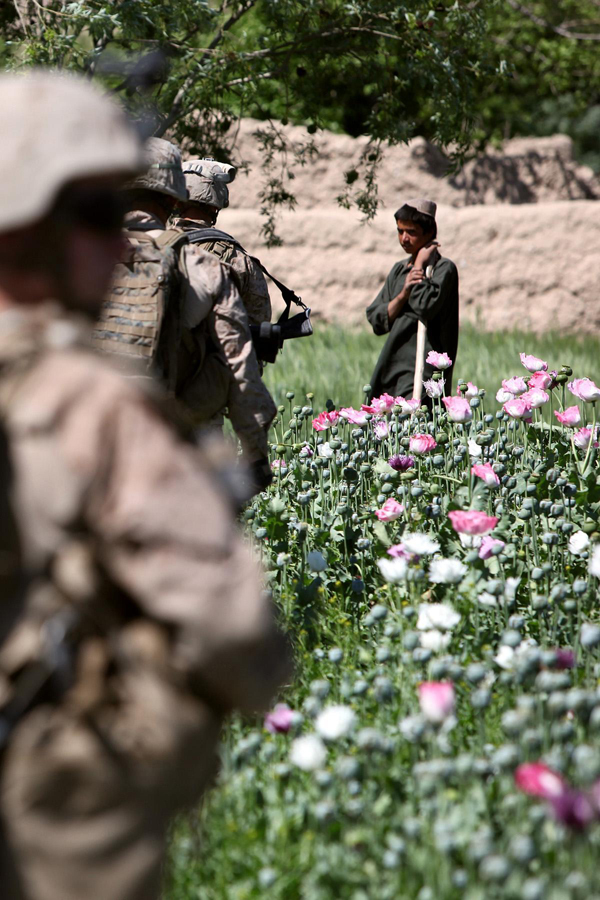
An Afghan boy watches Marines with Bravo Battery, 1st Battalion, 10th Marines, Regimental Combat Team-8, patrol a poppy field near the Kajaki green zone in Helmand province, Afghanistan, April 19. During daily patrols over the last several months Bravo Battery Marines have come to know the local kids as both a sign of familiarity and safety.
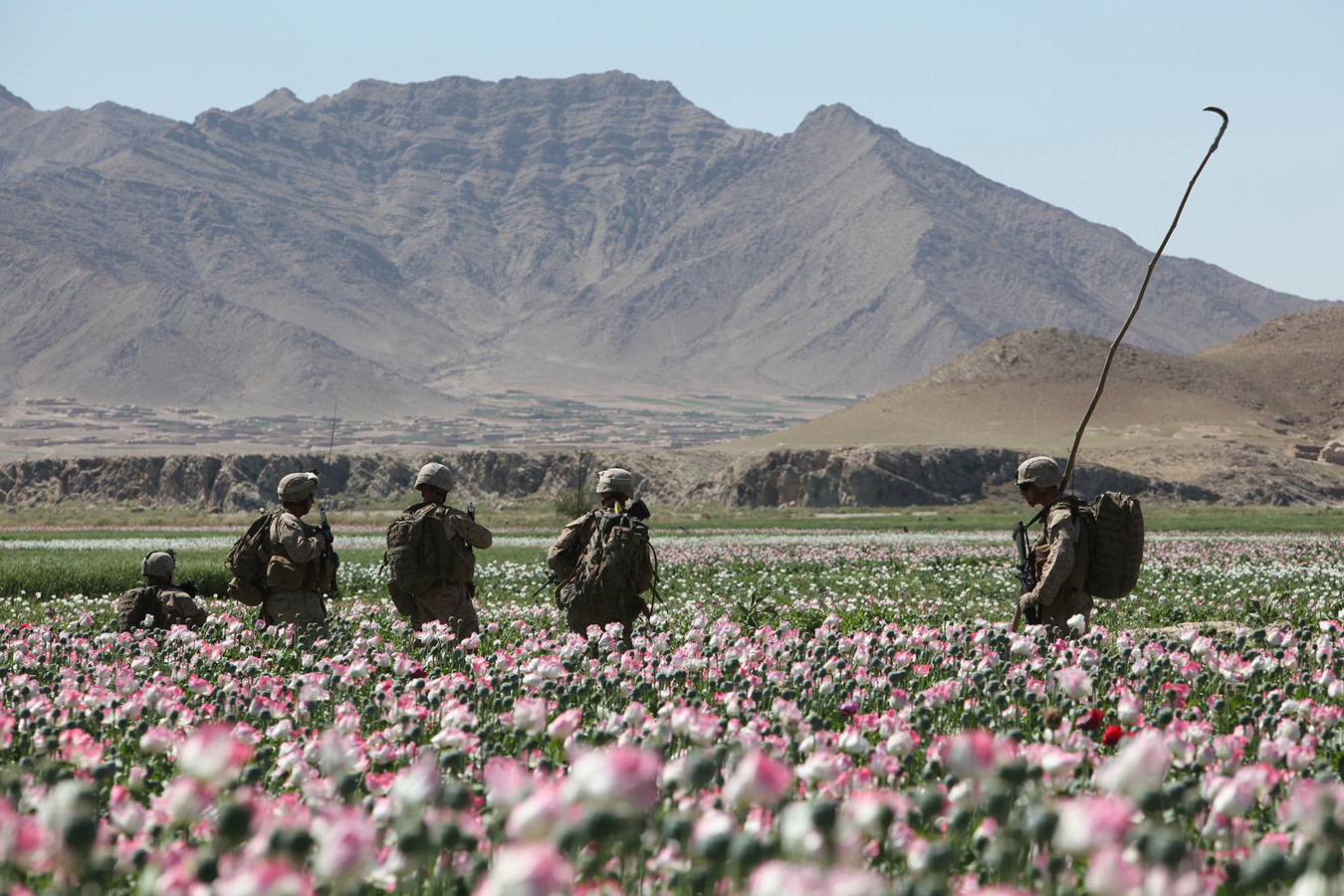
Marines with Bravo Battery, 1st Battalion, 10th Marines, Regimental Combat Team 8, patrol through a poppy field in the Kajaki green zone, Helmand province, Afghanistan, April 19. An artillery unit by doctrine, Bravo Battery has served as a provisional infantry rifle company for the last several months while protecting the area around the Kajaki Dam.
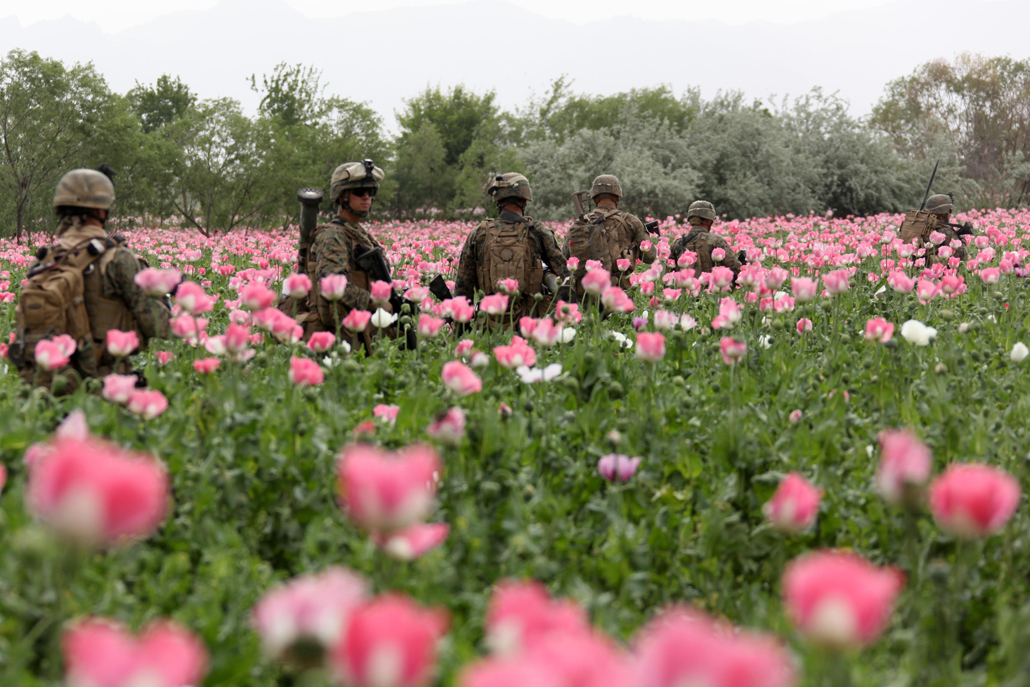
U.S. Marines with 1st Platoon, Company I, Battalion Landing Team 3/8, Regimental Combat Team 8, return to base through a poppy field after a security patrol from their patrol base in Helmand province's Green Zone, west of the Nahr-e Saraj canal, April 13. Elements of 26th Marine Expeditionary Unit deployed to Afghanistan to provide regional security in Helmand province in support of the International Security Assistance Force.
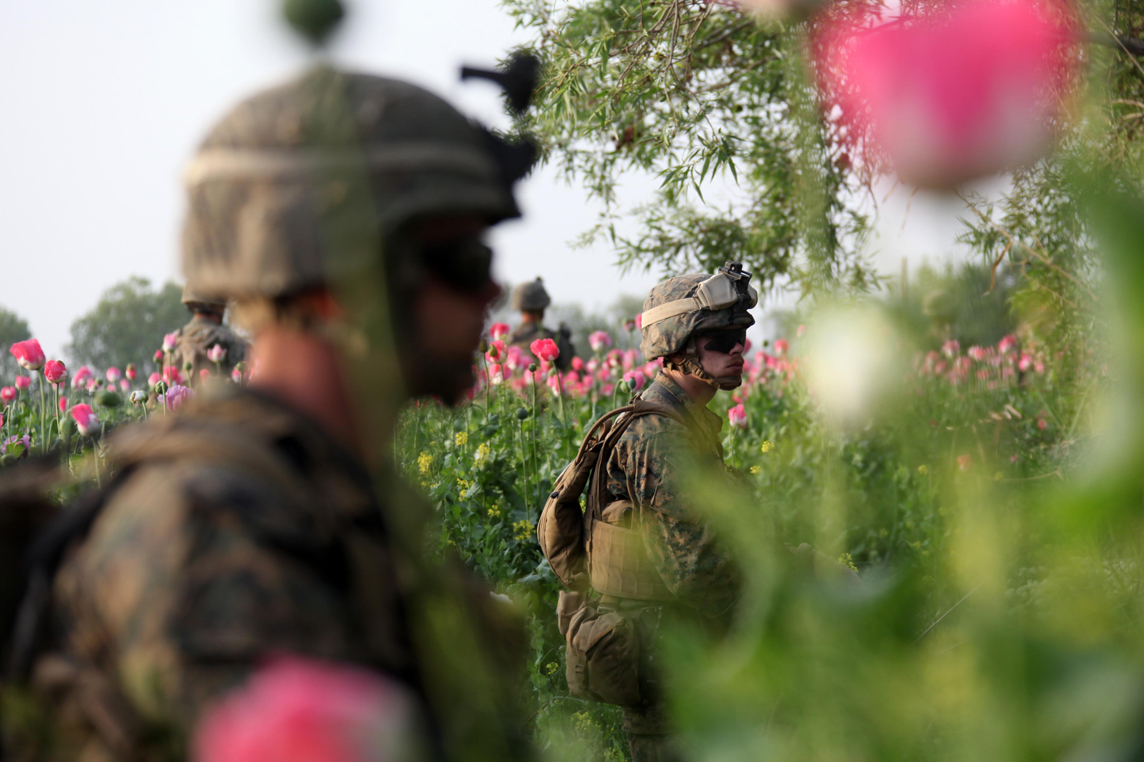
U.S. Marine Corps Lance Cpl. Mark Bower (right), a 60mm mortarman, and U.S. Marines with 1st Platoon, Company I, Battalion Landing Team 3/8, Regimental Combat Team 8, provide security for another element at the edge of a poppy field during a security patrol from their patrol base in Helmand province's Green Zone, west of the Nahr-e Saraj canal, April 13, 2011. Elements of 26th Marine Expeditionary Unit deployed to Afghanistan to provide regional security in Helmand province in support of the International Security Assistance Force.
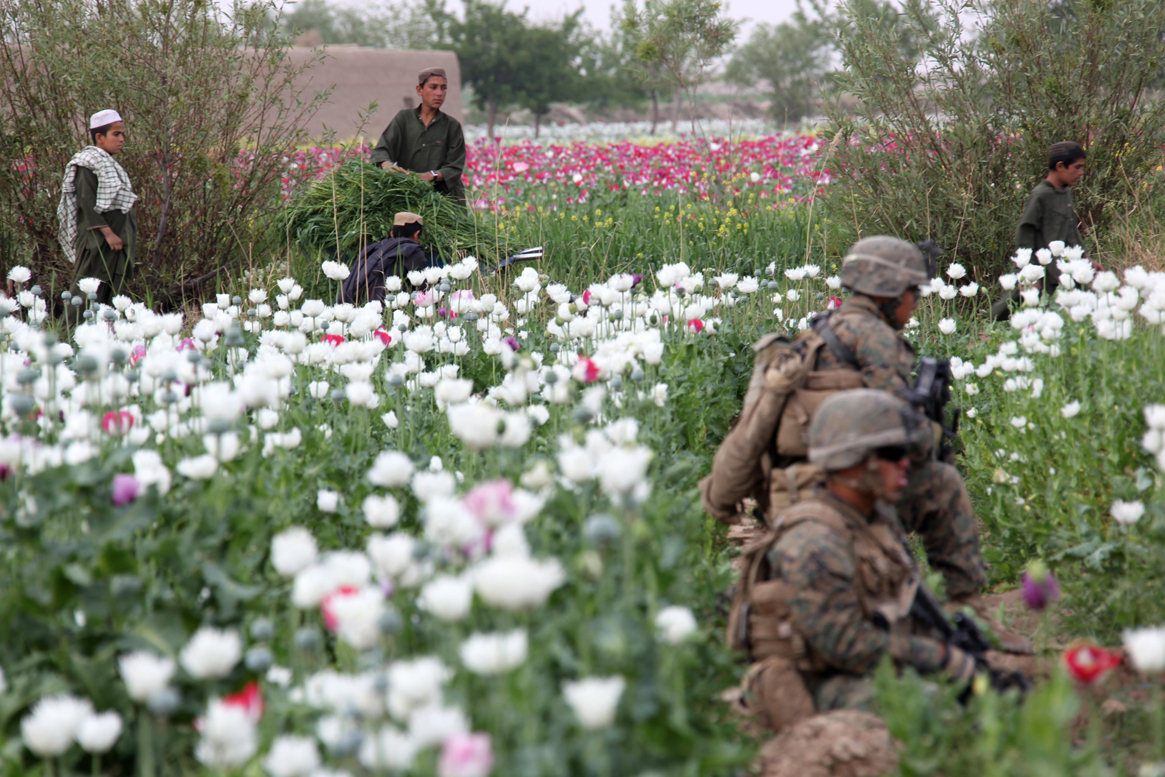
U.S. Marines Lance Cpl. Zachary Mizasawa, top, an M249 squad automatic weapon gunner, and Lance Cpl. Kevin Gonzalezsierra, a rifleman, both with 1st Platoon, Company I, Battalion Landing Team 3/8, Regimental Combat Team 8, hold in place while a group of Afghan boys tend poppy crops during a security patrol from their patrol base in Helmand province's Green Zone, west of the Nahr-e Saraj canal, April 7, 2011. Elements of 26th Marine Expeditionary Unit deployed to Afghanistan to provide regional security in Helmand province in support of the International Security Assistance Force.
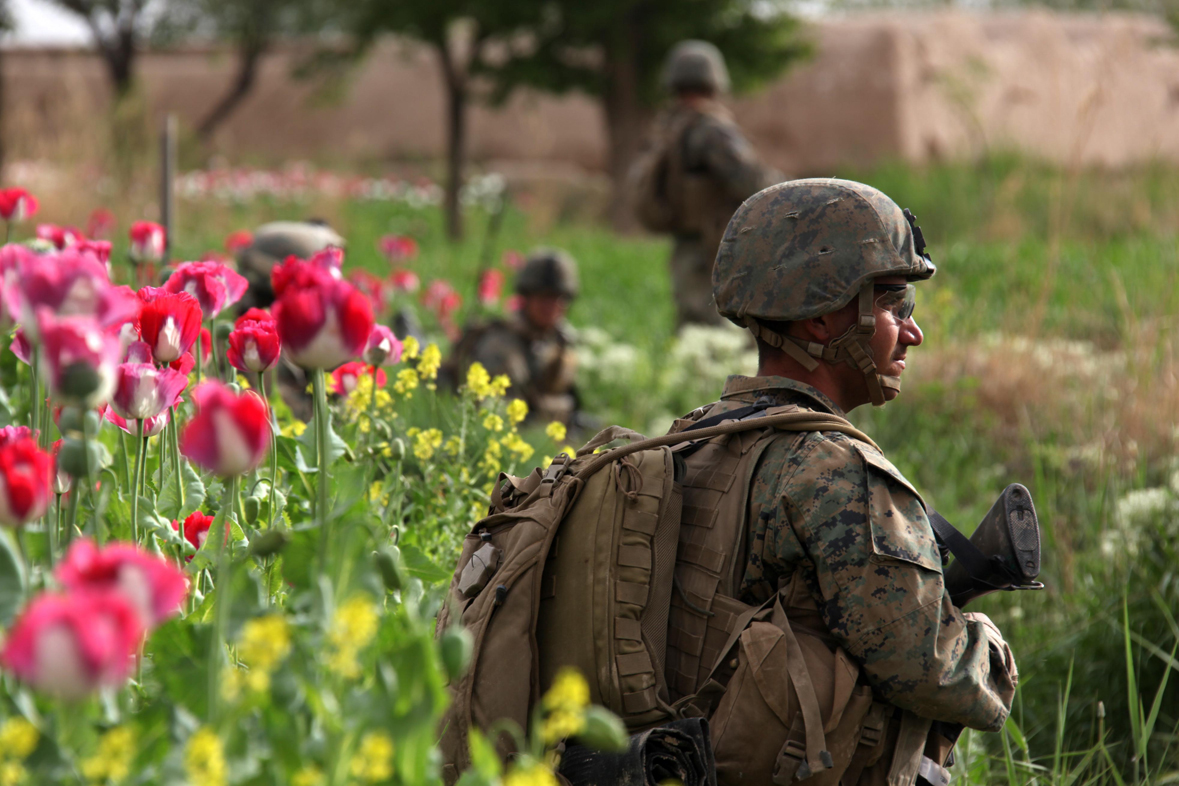
U.S. Navy Seaman Jeremy Threatte, a corpsman , and U.S. Marines with 2nd Platoon, Company I, Battalion Landing Team 3/8, Regimental Combat Team 8, pause at the edge of a poppy field during a security patrol from their patrol base in Helmand province's Green Zone, west of the Nahr-e Saraj canal, April 5, 2011. Elements of 26th Marine Expeditionary Unit deployed to Afghanistan to provide regional security in Helmand province in support of the International Security Assistance Force.
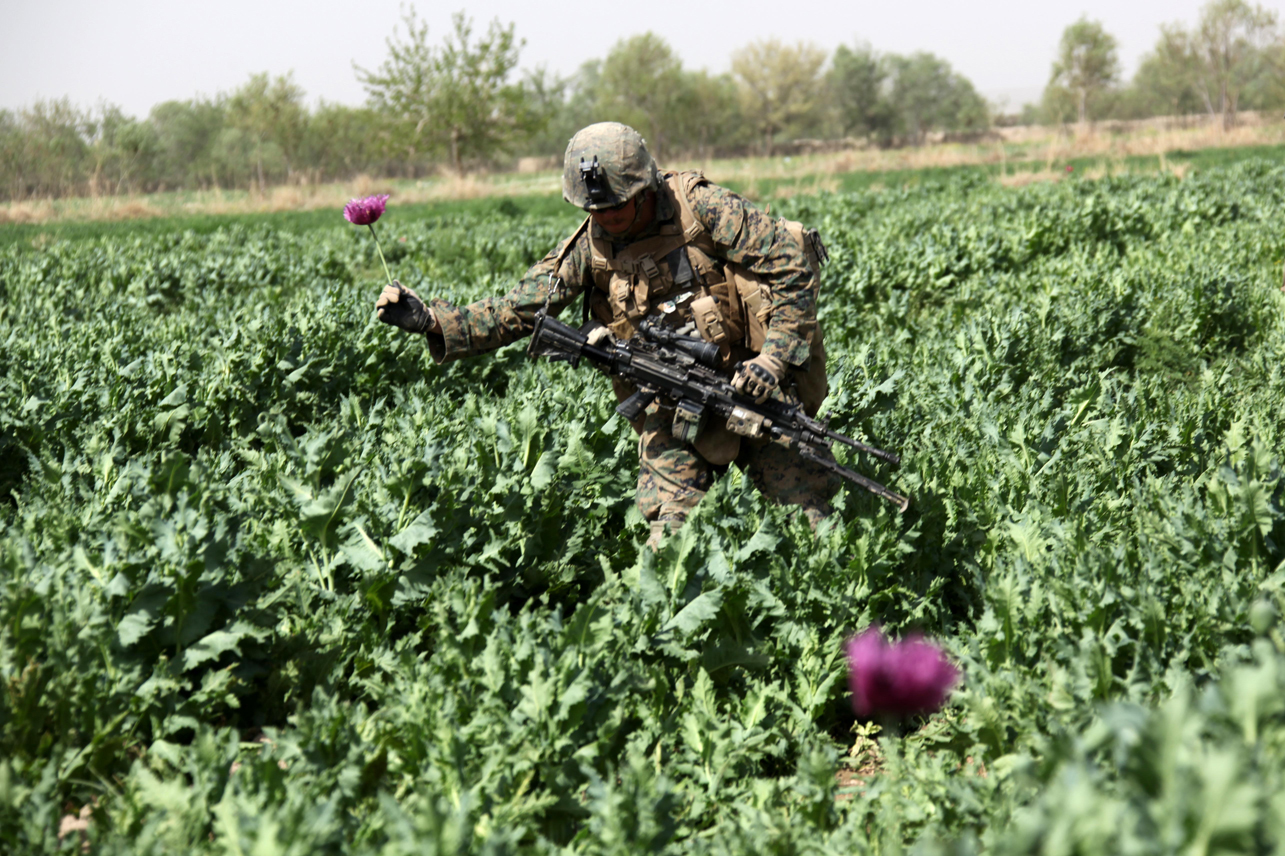
U.S. Marine Corps Lance Cpl. Anthony Duncan, a M249 Squad Automatic Weapon gunner with 2nd Platoon, Company I, Battalion Landing Team 3/8, Regimental Combat Team 8, picks a poppy flower while returning from a security patrol through a poppy field in Helmand province's Green Zone, west of the Nahr-e Saraj canal, March 25. Elements of 26th Marine Expeditionary Unit deployed to Afghanistan to provide regional security in Helmand province in support of the International Security Assistance Force.
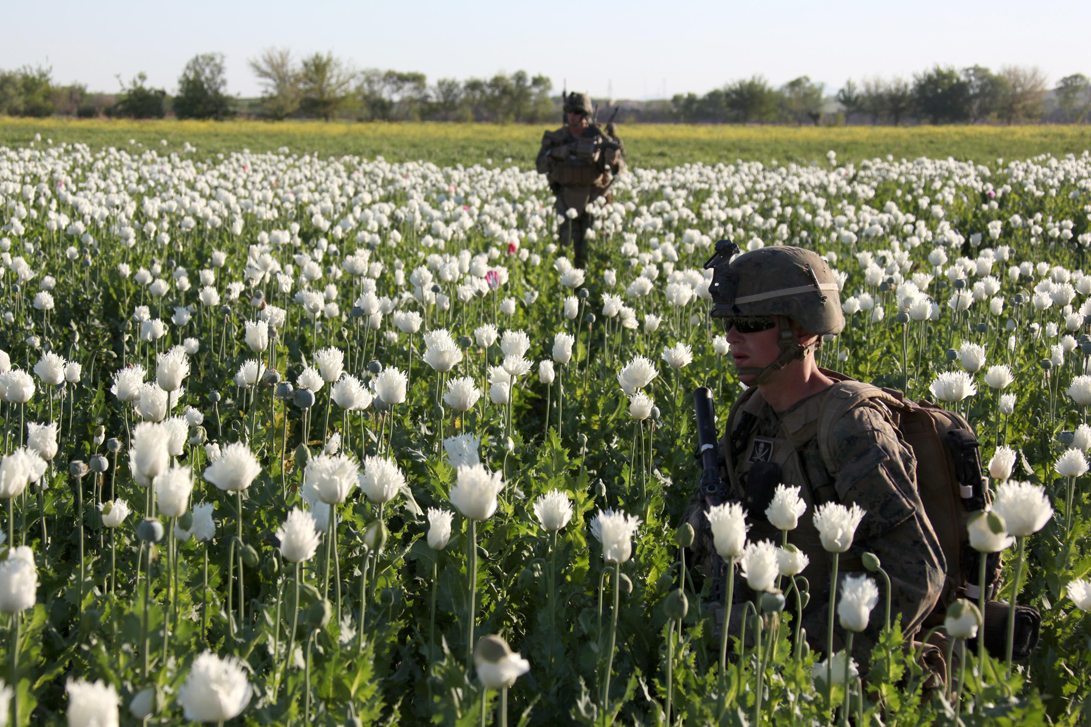
U.S. Navy Hospitalman Chris Coughlin, a corpsman with 1st Platoon, Company I, Battalion Landing Team 3/8, Regimental Combat Team 8, pauses in a poppy field during a security patrol from their patrol base in Helmand province's Green Zone, west of the Nar-e Saraj canal, April 1. Elements of 26th Marine Expeditionary Unit deployed to Afghanistan to provide regional security in Helmand province in support of the International Security Assistance Force.
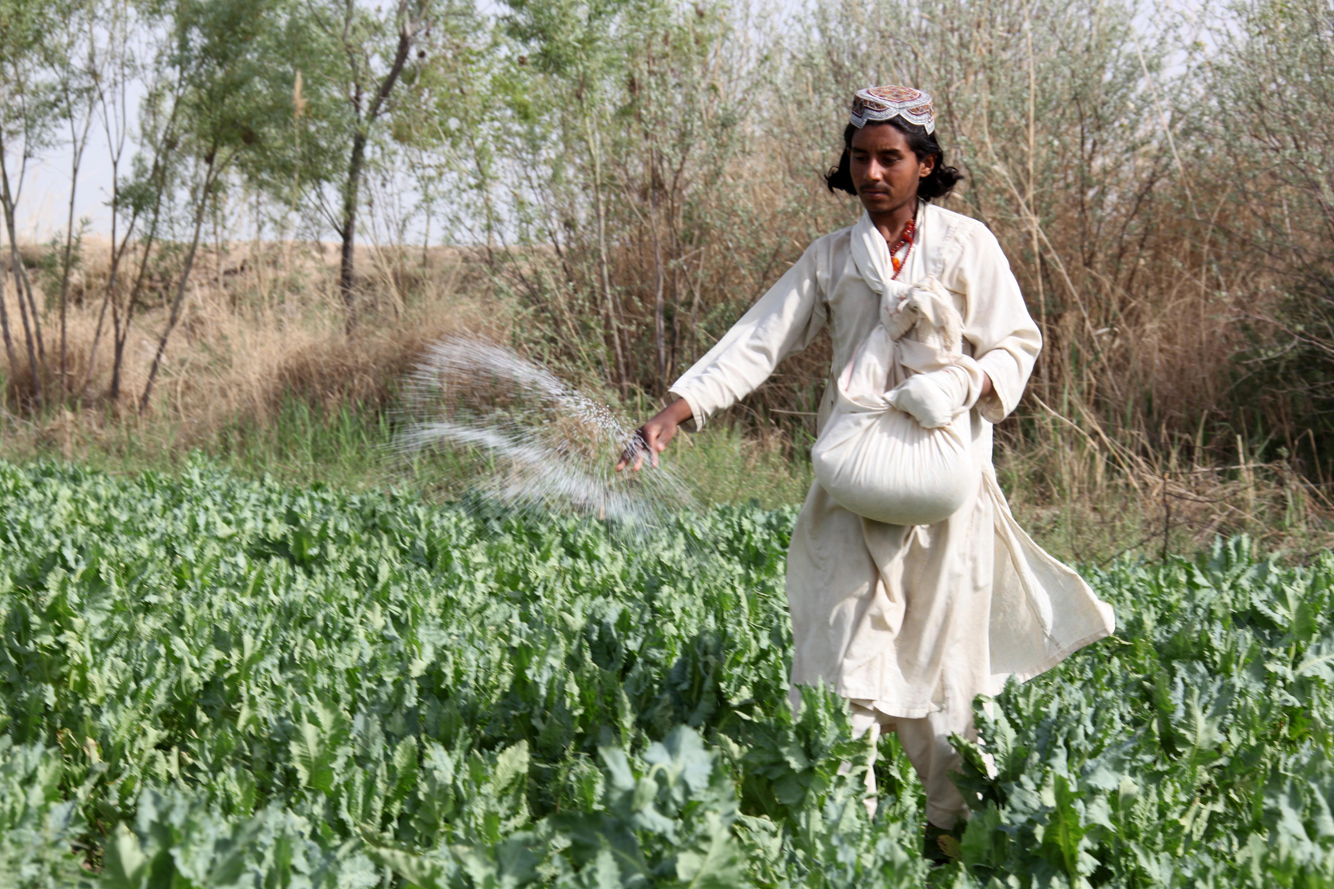
An Afghan farmer fertilizes his poppy field near the patrol base of U.S. Marine Corps Company I, Battalion Landing Team 3/8, Regimental Combat Team 8, in Helmand province's Green Zone, west of the Nahr-e Saraj canal, March 27. Elements of 26th Marine Expeditionary Unit deployed to Afghanistan to provide regional security in Helmand province in support of the International Security Assistance Force.
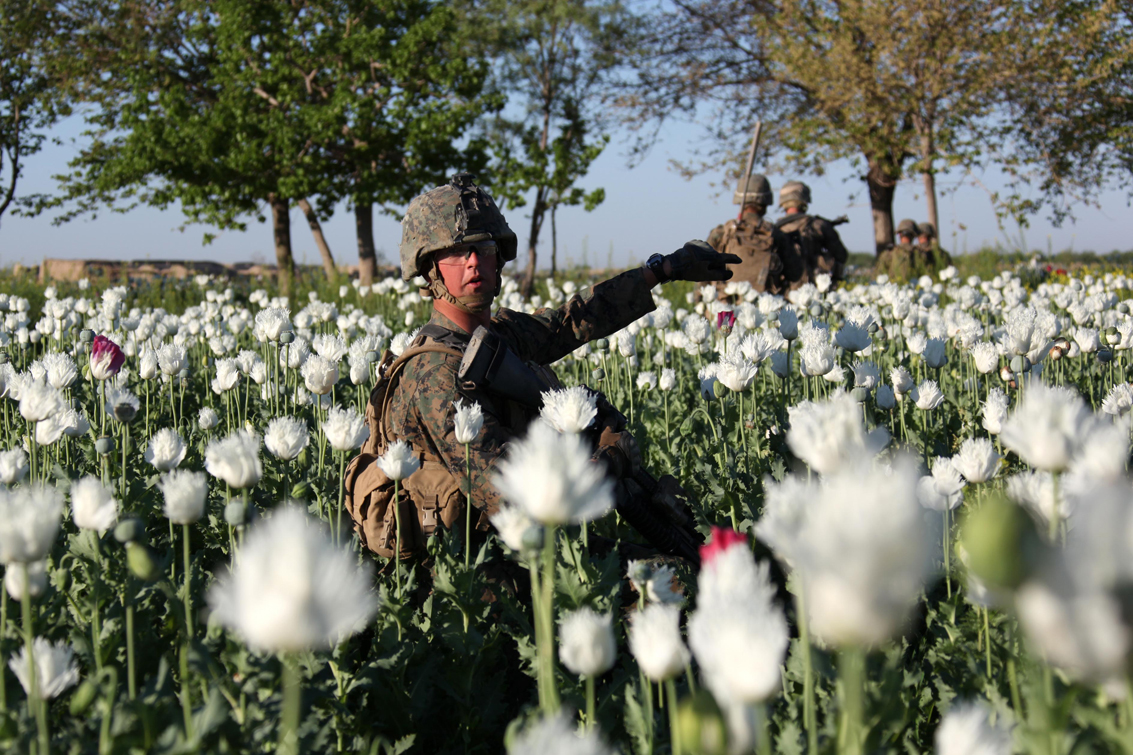
U.S. Marine Corps Lance Cpl. Timothy Brown, a team leader with 1st Platoon, Company I, Battalion Landing Team 3/8, Regimental Combat Team 8, passes word to his patrol members in a poppy field during a security patrol from their patrol base in Helmand province's Green Zone, west of the Nar-e Saraj canal, April 1. Elements of 26th Marine Expeditionary Unit deployed to Afghanistan to provide regional security in Helmand province in support of the International Security Assistance Force.
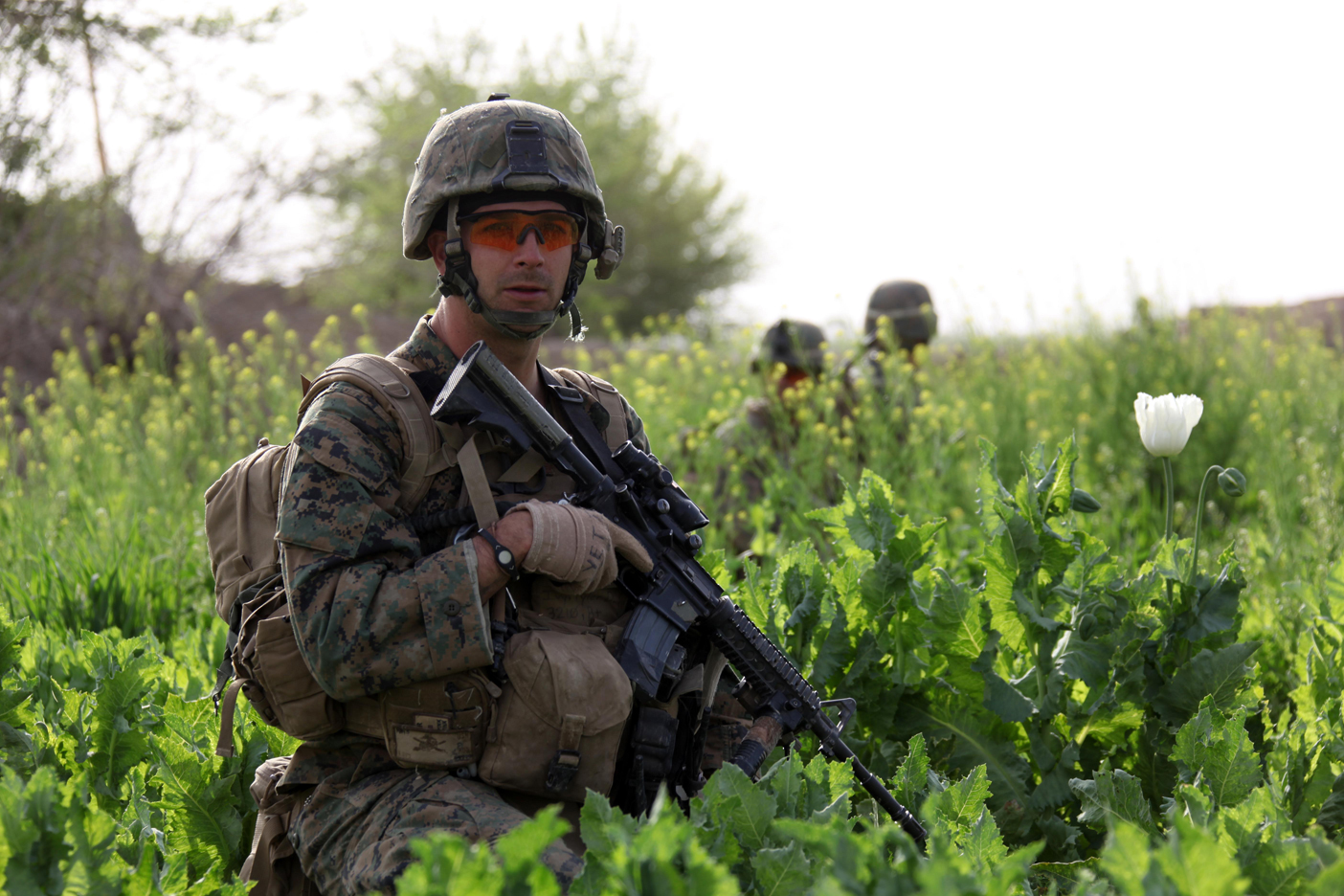
U.S. Navy Petty Officer 3rd Class Tyler Ivy, hospital corpsman, attached to 1st Platoon, Company I, Battalion Landing Team 3/8, Regimental Combat Team 8, pauses during a security patrol through a poppy field from their patrol base in Helmand province's Green Zone, west of the Nahr-e Saraj canal, March 27. Elements of 26th Marine Expeditionary Unit deployed to Afghanistan to provide regional security in Helmand province in support of the International Security Assistance Force.
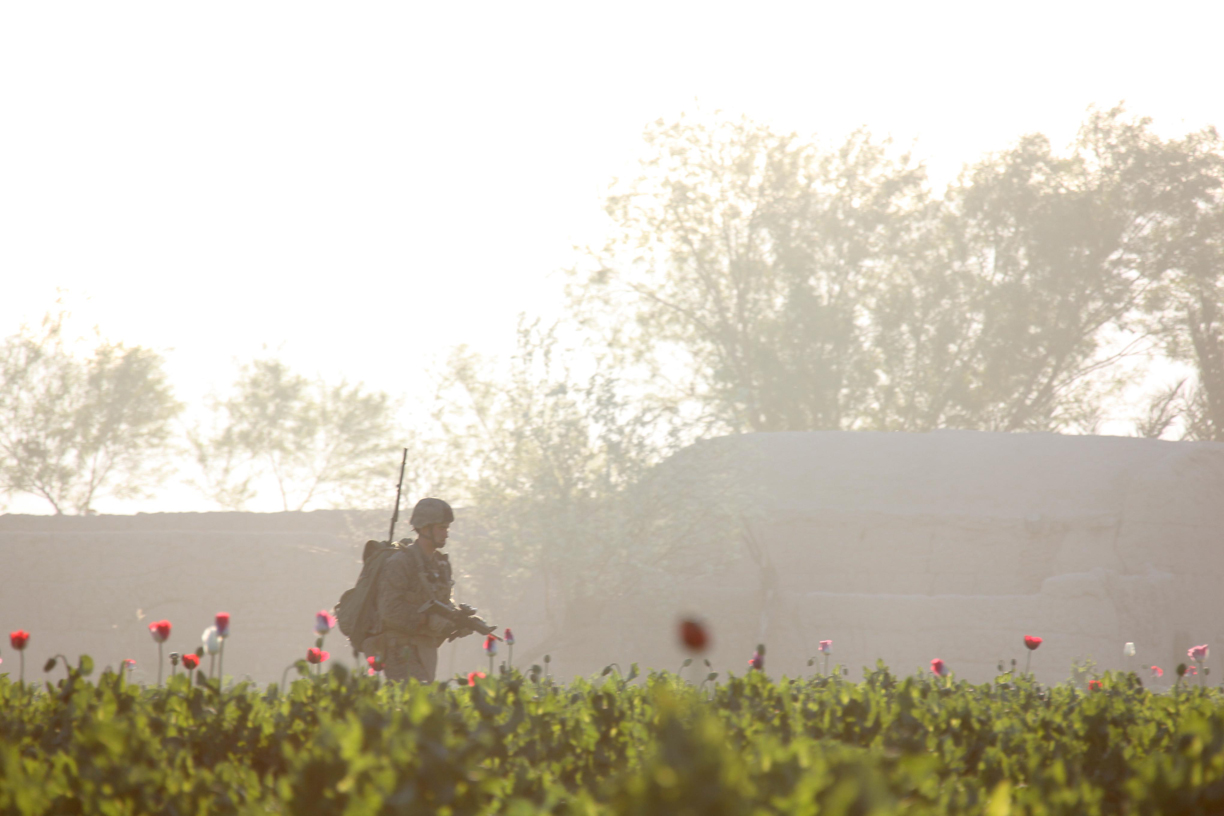
U.S. Marine Corps Lance Cpl. Clay Sherrod, an M249 squad automatic weapon gunner with Sniper Platoon attached to Company I, Battalion Landing Team 3/8, Regimental Combat Team 8, conducts a security patrol through a poppy field in the early morning haze from their patrol base in Helmand province's Green Zone, west of the Nar-e Saraj canal, April 1. Elements of 26th Marine Expeditionary Unit deployed to Afghanistan to provide regional security in Helmand province in support of the International Security Assistance Force.
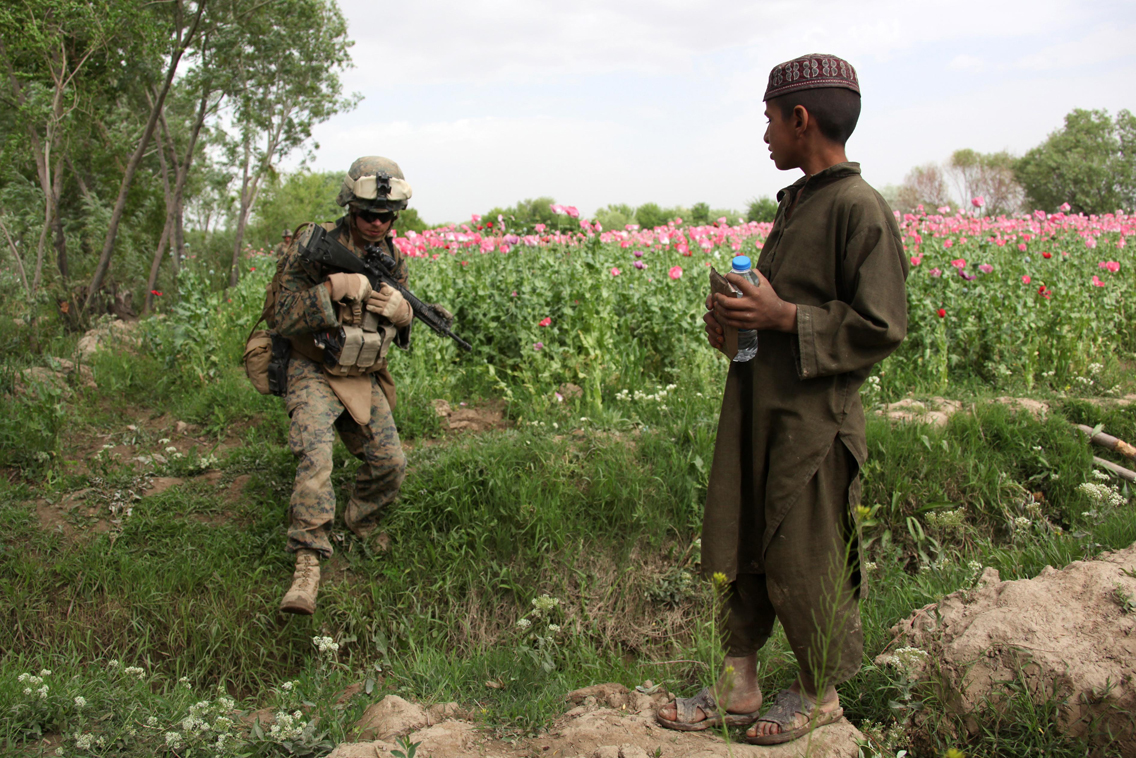
An Aghan boy working in a poppy field watches as U.S. Marine Corps Lance Cpl. Mark Bower, a 60mm mortarman with 1st Platoon, Company I, Battalion Landing Team 3/8, Regimental Combat Team 8, crosses a ditch during a security patrol from their patrol base in Helmand province's Green Zone, west of the Nahr-e Saraj canal, April 13. Elements of 26th Marine Expeditionary Unit deployed to Afghanistan to provide regional security in Helmand province in support of the International Security Assistance Force.
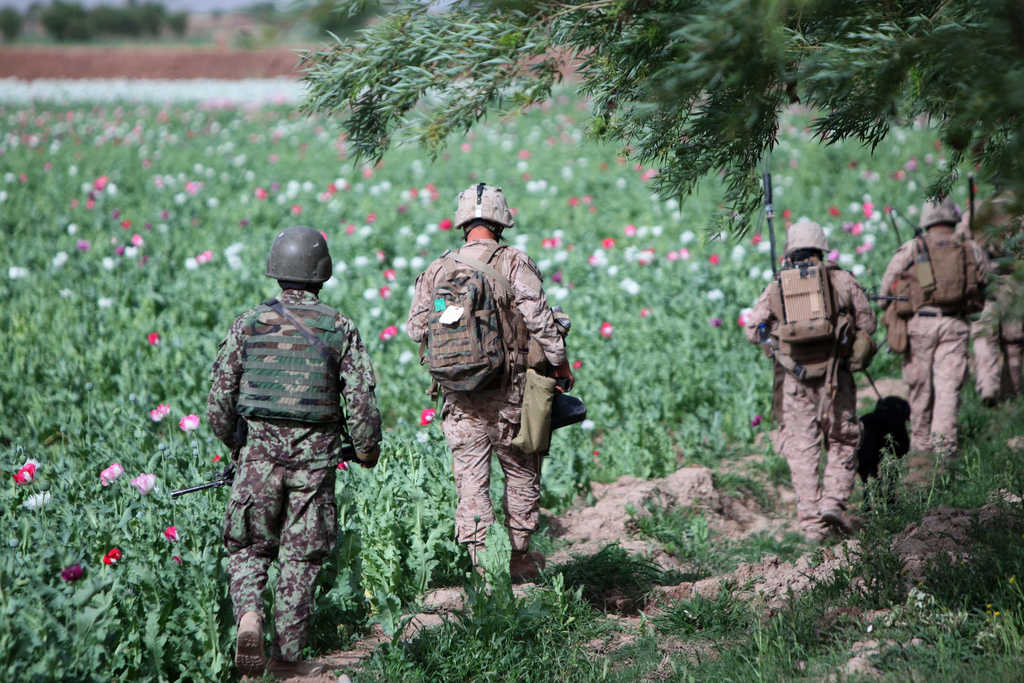
An Afghan National Army soldier accompanies a squad of Marines with Company B, 1st Tank Battalion, during a mission April 9. Tankers had to learn a whole new skill set in order to be successful during their seven-month tour in Afghanistan.
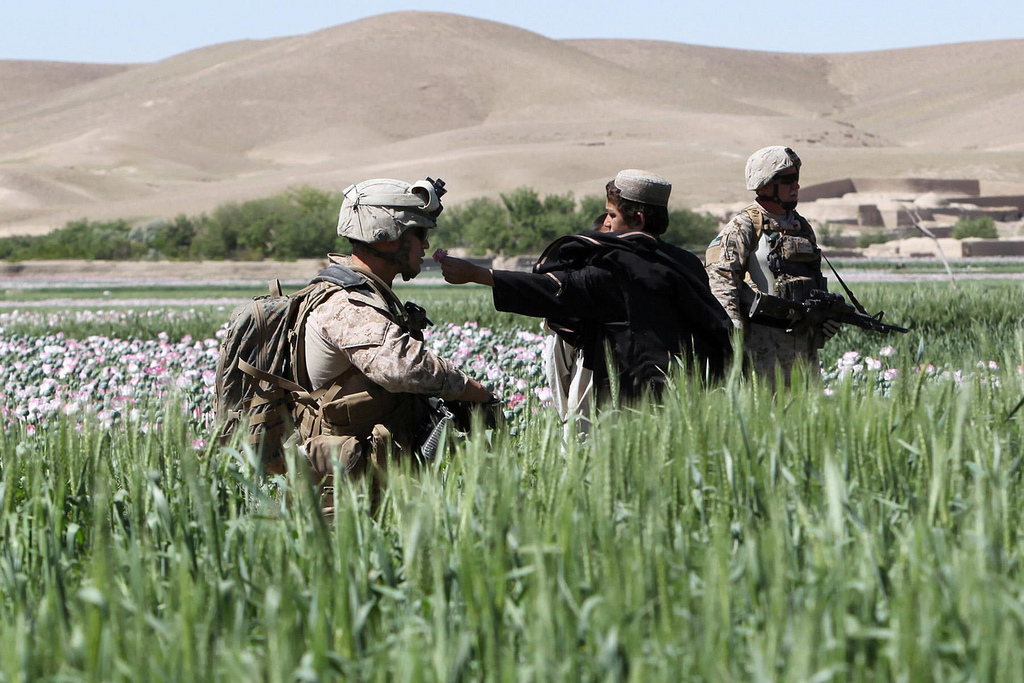
An Afghan child helps Cpl. Anthony J. Chavez, an Albuquerque, N.M., native, and a provisional rifleman with Bravo Battery, 1st Battalion, 10th Marines, Regimental Combat Team-8, stop to smell the flowers during a patrol halt in the Kajaki green zone, Helmand province, Afghanistan, April 19.
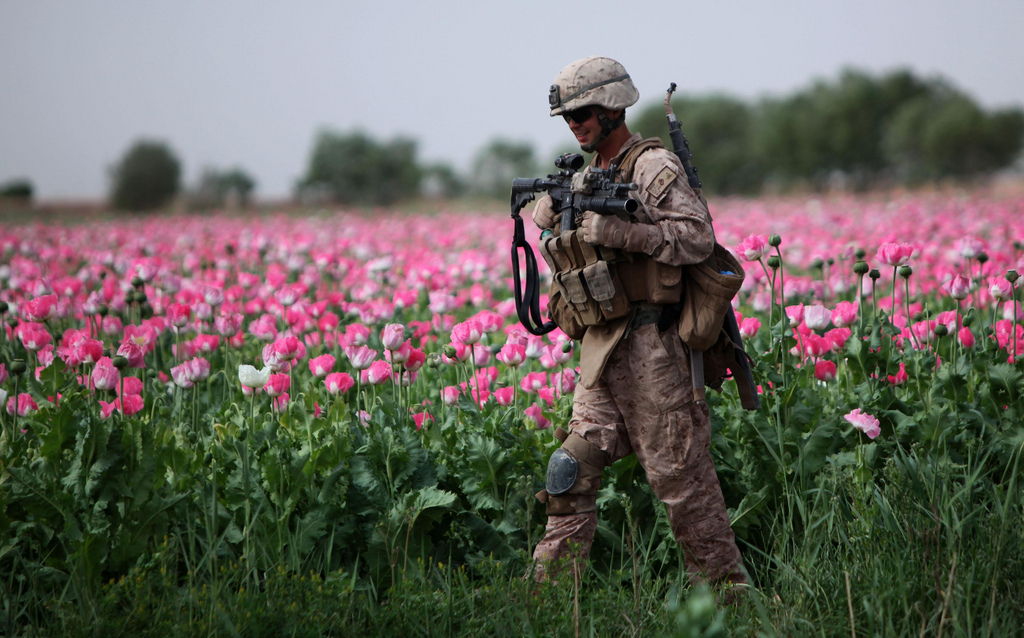
MARJAH, Helmand province, Islamic Republic of Afghanistan - Corporal Mark Hickok, a 23-year-old combat engineer from North Olmstead, Ohio, patrols through a field during a clearing mission April 9. Marines with Company B, 1st Tank Battalion, learned basic route clearance techniques from engineers like Hickok, who are deployed with 1st Combat Engineer Battalion.
Share this: