
A series of “limited release” directives from the Department of Defense and the Chairman of the Joint Chiefs of Staff including instructions, directives and manuals detailing DoD policy on a variety of topics from counterintelligence to the use of lasers in space.
Joint Chiefs of Staff
Restricted Joint Chiefs of Staff Manual: Intelligence Planning
This manual provides guidance to Joint Staff, Service (including Service intelligence centers and reserve components), Combatant Command (CCMD), and Combat Support Agency (CSA) personnel for conducting collaborative intelligence planning (IP) primarily in support of Combatant Commander (CCDR) campaign plans, contingency plans, and orders.
U.S. Navy
U.S. Navy Broad Area Maritime Surveillance Demonstrator (BAMS-D) Standard Operating Procedures
Standard operating procedures for Broad Area Maritime Surveillance Demonstrator (BAMS-D) program flights from December 2011.
U.S. Navy
U.S. Navy 2012 Maryland Drone Crash Investigation Report
An investigation report concerning the crash of a RQ-4A Global Hawk unmanned aerial vehicle on June 11, 2012 during a training flight near the Naval Air Station Patuxent River in Maryland. The report concludes that the accident occurred due to ” mechanical malfunction of the right ruddervator actuator”. However, the pilot “failed to follow the proper emergency procedures” which “did not produce disastrous results in this particular event; however, future breaches of established procedures could produce a different outcome.”
Department of Defense
(U//FOUO) DoD Instruction: Illumination of Objects in Space by Lasers
Implements policy, assigns responsibilities, and prescribes procedures under reference (a) regarding the illumination of satellites by lasers to protect space assets from any potential harm that could be caused by such illumination.
Joint Chiefs of Staff
Joint Publication 3-14 Space Operations
This publication provides guidance for planning, executing, and assessing joint space operations. It provides space doctrine fundamentals for all joint forces; describes the military operational principles associated with support from, through, and operating in space; explains Joint Staff, combatant command (CCMD), United States Strategic Command (USSTRATCOM), and USSTRATCOM functional and Service component relationships and responsibilities; and establishes a framework for the employment of space forces and space capabilities.
Department of Homeland Security
(U//FOUO) DHS Protective Measures Guide for the U.S. Outdoor Venues Industry

Within DHS, this overarching responsibility for critical infrastructure protection is delegated to the National Protection and Programs Directorate’s (NPPD) Office of Infrastructure Protection (IP), specifically the Sector-Specific Agency Executive Management Office (SSA EMO) CF Branch for commercial facilities. Serving as the Sector-Specific Agency (SSA) for the CF Sector, the CF Branch works with its partners to address and highlight low-cost preparedness and risk management options in the products and tools it makes available to the private sector. For example, the CF SSA has been working to produce a suite of protective measures guides that provide an overview of best practices and protective measures designed to assist owners and operators in planning and managing security at their facilities or events. The Protective Measures Guide for the U.S. Outdoor Venues Industry is one of these guides and reflects the special considerations and challenges posed by the Outdoor Venues Subsector.
Department of Defense
Restricted Joint Chiefs of Staff Instruction: Communication Security Releases to Foreign Nations
Chairman of the Joint Chiefs of Staff Instruction on disclosing, releasing, and transferring information systems security (INFOSEC) products or associated communications security (COMSEC) information to foreign governments.
Joint Chiefs of Staff
(U//FOUO) Joint Chiefs of Staff Instruction: Military Information Support Operations (MISO)
In accordance with (IAW) reference a, MISO replaces the term psychological operations (PSYOP). This instruction provides strategic direction for inclusion of MISO to support the full range of military operations including military engagement, security cooperation and deterrence; crisis response and limited contingency operations; major operations and campaigns; and as an integrated information activity within the DOD’s overall contribution to United States Government (USG) communication strategies.
Department of Defense
(U//FOUO) DoD Instruction: Signals Intelligence (SIGINT)
DoD Instruction O-3115.07 concerning Signals Intelligence (SIGINT) or intelligence comprising, either individually or in combination, all communications intelligence, electronic intelligence, and foreign instrumentation signal intelligence, however transmitted.
Department of Defense
(U//FOUO) DoD Manual: Defense Industrial Base (DIB) Cybersecurity Program Classification Manual
DIB CS/IA is the DoD program to protect critical DoD unclassified program, technology, and operational information residing on, or transiting, DIB unclassified networks. DoD Components and industry participants collaborate to protect DoD information through the development, implementation, and execution of DoD and DIB processes and procedures.
News
DHS, FBI Warn “Malicious Actors” Are Using Company Websites, Social Media to Plan Attacks
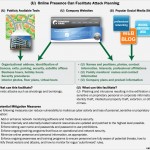
The Department of Homeland Security and FBI are warning law enforcement and security personnel around the country that online tools, search engines and corporate websites are a potential source of information for “malicious actors” seeking to plan terrorist attacks.
Department of Homeland Security, Federal Bureau of Investigation
(U//FOUO) DHS-FBI Bulletin: Use of the Internet for Attack Planning
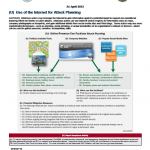
Malicious actors may leverage the Internet to gain information against a potential target to support pre-operational planning efforts for kinetic or cyber attacks. Malicious actors can use Internet search engines for information such as maps, company photographs or blueprints, and gain additional details from social media sites and Web blogs. Some actors may use more sophisticated techniques—such as phishing, spear phishing, or actual penetration of an organization’s network or devices—which can be used to gather personal, sensitive, or proprietary data.
Department of Defense
(U//FOUO) DoD Instruction: Intelligence Oversight, Coordination, Assessment and Reporting
Establishes policy, assigns responsibilities, and outlines procedures for oversight, coordination, assessment, and reporting of DoD intelligence and intelligence-related sensitive activities.
Department of Defense
(U//FOUO) DoD Instruction: Raven Rock Mountain Complex (RRMC)
The mission of RRMC is to support the Secretary of Defense, the Chairman of the Joint Chiefs of Staff, select DoD Components and, as appropriate, non-DoD agencies of the Federal Government, and to enable the execution of DoD mission-essential functions (MEFs) in accordance with DoDD S-5100.44 and continuity of operations (COOP) plans and operational orders.
Department of Defense
(U//FOUO) DoD Instruction: Counterintelligence (CI) Activities Supporting Research, Development, and Acquisition
The CI mission in RDA informs the DoD Components and supporting CDCs of foreign collection threats and detects FIE targeting of defense-related technology. The CI support enables RDA program personnel to implement countermeasures and enables CI to develop activities that negate, counter, penetrate, or exploit an FIE.
United States
Restricted U.S. Postal Service Mail Cover Request Procedures
This publication provides instructions to law enforcement agencies requesting a mail cover as part of a criminal investigation. All conditions and procedures contained in these instructions must be met before a mail cover can be authorized.
California
San Francisco Bay Area Urban Shield 2013 Overview Presentation

Urban Shield is a continuous, 48-hour Full Scale Multi-Disciplinary Homeland Security/Disaster Preparedness Exercise hosted by the Alameda County Sheriff’s Office, with the support of the Bay Area Urban Area Security Initiative (UASI), and more than 150 local, state, federal, international and private sector partners.
Department of Defense
(U//FOUO) DoD Directive: Counterintelligence (CI)
Defense CI activities shall be undertaken as part of an integrated DoD and national effort to detect, identify, assess, exploit, penetrate, degrade, and counter or neutralize intelligence collection efforts, other intelligence activities, sabotage, espionage, sedition, subversion, assassination, and terrorist activities directed against the Department of Defense, its personnel, information, materiel, facilities, and activities, or against U.S. national security.
Department of Defense
(U//FOUO) DoD Instruction: Counterintelligence (CI) Inquiries
This Instruction implements the policy in DoD Directive (DoDD) O-5240.02 to assign responsibilities and establish procedures for conducting CI inquiries within the Department of Defense pursuant to the authority in DoDD 5143.01.
U.S. Army War College
U.S. Army War College Protection of Civilians Military Reference Guide
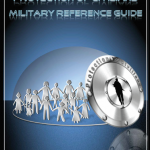
This PoC Military Reference Guide is intended to be a resource for military commanders and staffs who must consider PoC while conducting operations in PSO and MOAC contexts as shown below Other interested readers may include international organizations, national militaries, training centers, and civilian and police officials who are also concerned with PoC.
Department of Defense
(U//FOUO) DoD Procedures for Wire, Electronic and Oral Interceptions for Law Enforcement
The current Department of Defense manual on the procedures for intercepting wire, electronic and oral communications for law enforcement. The manual also discusses “access to electronic communications in electronic storage or in a remote computing service.”
Department of Homeland Security, Federal Bureau of Investigation
(U//FOUO) DHS-FBI Report: Idaho Man Arrested for Providing Material Support to Islamic Movement of Uzbekistan
This Joint Intelligence Bulletin (JIB) provides information on the 16 May 2013 arrest of Idaho-based Uzbekistan national Fazliddin Kurbanov by the FBI Boise Joint Terrorism Task Force (JTTF). On 16 May, Kurbanov was charged under two indictments alleging terrorism, one each in the United States District Court, District of Idaho and United States District Court, District of Utah. FBI and DHS are providing this information to support their respective activities and to assist federal, state, local, tribal, and territorial government counterterrorism and law enforcement officials and the private sector in deterring, preventing, or disrupting terrorist attacks against the United States. All events described in this JIB are taken from the criminal indictment. The charges contained in the indictment are mere allegations. As in any criminal case, the defendant is presumed innocent until proven guilty in a court of law.
National Security Agency
(U//FOUO) NSA Ft. Gordon Georgia “Sweet Tea” Building Specifications
More than 1700 pages of building specifications for the NSA/CSS facility at Fort Gordon, Georgia known as “Sweet Tea” dated February 5, 2010.
United Nations
UN Human Rights Council Report: Impact of State Surveillance on Privacy and Freedom of Expression
The present report analyses the implications of States’ surveillance of communications for the exercise of the human rights to privacy and to freedom of opinion and expression. While considering the impact of significant technological advances in communications, the report underlines the urgent need to further study new modalities of surveillance and to revise national laws regulating these practices in line with human rights standards.