August 3, 2012 in Kenya
Al-Shabaab, an al-Qaida ally, relies on a broad range of funding sources to support its terrorist and paramilitary operations in Somalia. However, little comprehensive information is available on the character and extent of this funding network within the large communities of Somali expats in Kenya. Existing reports suggest that alternative remittance systems (ARS), especially hawaladars, are a reliable source of income for Somalis still living in Somalia. Expat family members living in Kenya rely on these systems to transfer money to their relatives in Somalia. Recent reports suggest al-Shabaab is a beneficiary of these services1. Al-Shabaab could exploit current and future hawaladar networks in Kenya to transit funds to support IED operations against US or allied humanitarian or military operations. Thus, networks of undocumented and unmonitored hawaladars within the country could pose a threat to future counterterrorism or humanitarian operations in the region. Further study of the role of ARS in Kenya in the funding of al-Shabaab operations is recommended.
Tags: Al-Shabaab, Kenya, Money Laundering
August 3, 2012 in Joint Improvised Explosive Device Defeat Organization
This study investigates Iran’s strategy of smuggling weapons to Afghan insurgents. Based on the hypothesis that Iran utilizes its weapons smuggling networks as proxies to leverage against foreign threats with predictable results, this study will address Iran’s future weapons smuggling behaviors. Iran, like the United States, is a complex actor pursuing rational, national strategic objectives. The perceived dichotomy between Iran’s words and actions results in an atmosphere of suspicion surrounding Iranian motives that can potentially lead to unintended escalations between Iran and other nations. An increase in tensions between the U.S. and Iran, specifically over perceived threats to Iranian sovereignty, will be matched with an increase in the rate and quantity of weapons, an introduction of more capable weapons, or both. Given the elasticity of realizing strategic success by increasing the rate and quantity of weapons, Iran will likely attempt to quickly counter an imminent threat by deploying more destructive weapons comparable to those Iran supplies to Lebanese Hezbollah.
Tags: Afghanistan, Iran
August 1, 2012 in U.S. Army
This newsletter does not strive to make readers environmental experts. However, it does emphasize the importance of incorporating environmental considerations throughout the military decision-making process (MDMP). Through a variety of environmental lessons learned, this newsletter provides tactics, techniques, and procedures in an effort to reduce overall environmental risk.
Tags: For Official Use Only, U.S. Army
August 1, 2012 in Department of Defense
Over the last 10 years, the U.S. government has made significant investments in science and technology in order to enhance its ability to understand and shape public opinion and behavior abroad—a domain of activity referred to in this report as “shaping,” “influencing,” or “communication and persuasion.” Because this effort is taking place across a vast government bureaucracy, the policy-makers and practitioners engaged in communication and persuasion do not always know what tools are at their disposal and what tools need to be invented. To address this problem, the Department of Defense’s Rapid Reaction Technology Office (RRTO) issued a “Strategic Communication Science and Technology Plan” in 2009 that surveyed the government’s programs in this area and their gaps. To keep abreast of the latest technological developments, RRTO commissioned CNA to update this report for FY 2012. The updated report discusses domains for future investment in research and development (R&D); identifies gaps and proposes new science and technology (S&T) initiatives; and surveys current S&T programs.
Tags: Center for Naval Analyses, Strategic Communications
July 31, 2012 in Department of Defense
A list of current, ongoing, and planned Department of Defense Science and Technology Strategic Communication (SC) programs taken from the 2009 Strategic Communication Science and Technology Plan compiled by the Defense Research and Engineering Rapid Reaction Technology Office.
Tags: Social Media, Strategic Communications
July 30, 2012 in New York
In order to help ensure public safety and security and to detect, deter, and prevent potential terrorist activities, the New York City Police Department (NYPD) has developed a networked Domain Awareness System. The Domain Awareness System not only supplies critical supplemental assistance to officers’ ongoing security and public safety efforts, but also enhances the collaborative nature of those efforts by leveraging the resources of the private sector and other City agencies. Given the ongoing threat of terrorist attack, the Domain Awareness System is an important part of the NYPD’s integrated approach to providing protection for those who work in, live in, and visit New York City.
Tags: New York, NYPD
July 30, 2012 in Open Source Center, Syria
Understanding master narratives can be the difference between analytic anticipation and unwanted surprise, as well as the difference between communications successes and messaging gaffes. Master narratives are the historically grounded stories that reflect a community’s identity and experiences, or explain its hopes, aspirations, and concerns. These narratives help groups understand who they are and where they come from, and how to make sense of unfolding developments around them. As they do in all countries, effective communicators in Syria invoke master narratives in order to move audiences in a preferred direction. Syrian influencers rely on their native familiarity with these master narratives to use them effectively. This task is considerably more challenging for US communicators and analysts because they must place themselves in the mindset of foreign audiences who believe stories that — from an American vantage point — may appear surprising, conspiratorial, or even outlandish.
Tags: For Official Use Only, Open Source Center, Syria
July 29, 2012 in Central Intelligence Agency
A formerly classified document from 1952 on the CIA’s Project BLUEBIRD, an offshoot of Project MKULTRA.
Tags: Central Intelligence Agency, MKULTRA
July 27, 2012 in United States
A report from the Senate Select Committee on Intelligence detailing an investigation into the CIA’s MKULTRA program, dated August 3, 1977
Tags: Central Intelligence Agency, MKULTRA
July 26, 2012 in Central Intelligence Agency
A CIA Inspector General report written in 1963 following an investigation into the Agency’s MKULTRA program.
Tags: Central Intelligence Agency, MKULTRA
July 24, 2012 in U.S. Air Force, U.S. Army, U.S. Marine Corps, U.S. Navy
This publication provides multi-Service TTP for the seamless integration of air assets during the conduct of maritime surface warfare. The maritime domain is defined as the oceans, seas, bays, estuaries, islands, coastal areas, and the airspace above these, including the littorals. AOMSW is intended to support the joint force commander’s (JFC’s) objectives by providing capabilities/forces in support of joint maritime operations. The end state of this publication is a streamlined support process for maritime surface warfare within the joint force maritime component commander’s (JFMCC’s) area of operations (AO).
Tags: Distribution Restricted, U.S. Air Force, U.S. Army, U.S. Marine Corps, U.S. Navy
July 23, 2012 in Intelligence Fusion Centers, New Jersey
James Eagan Holmes, a 24-year-old male, allegedly shot and killed12 people and wounded approximately 38 more after opening fire in a crowded movie theater during a showing of the new Batman movie, “The Dark Knight Rises.” The shooting erupted during the midnight showing at the multiplex in Aurora, Colorado, not far from Denver, where a large crowd had gathered, some dressed as characters from the highly anticipated Batman sequel. Holmes began the attack by throwing two gas canisters into the theater after entering through an exit door that had been propped open. Witnesses stated many assumed it was a promotional stunt related to the movie and did not initially react. After both canisters had deployed, Holmes commenced shooting into the crowd.
Tags: Colorado, For Official Use Only, Fusion Centers
July 23, 2012 in Department of Homeland Security
Performance venues include theaters, concert halls, auditoriums, and amphitheaters, ranging in size and function from small neighborhood movie theaters or community playhouses to high-capacity venues in major metropolitan areas. Performance venues are relatively open-access, limited egress facilities and have been successfully targeted in the past.
Tags: Department of Homeland Security
July 22, 2012 in Australia
A collection of documents released publicly on July 11, 2012 in response to a Freedom of Information request from the Australian Department of the Prime Minister and Cabinet for material relating to WikiLeaks, Julian Assange and Bradley Manning.
Tags: Australia, Wikileaks
July 22, 2012 in Department of State
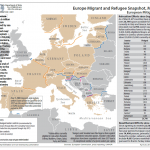
U.S. Department of State Humanitarian Information Unit map from July 19, 2012 depicting locations and numbers of internally and externally displaced persons as a result of the current conflict in Syria.
Tags: State Department, Syria
July 19, 2012 in Federal Bureau of Investigation
The FBI assesses with high confidence, based on multiple incident reports from a collaborative source with direct access to the information, that counterfeit and substandard lithium batteries pose a serious health and safety risk to consumers, specifically law enforcement officers, emergency medical services providers, and military personnel who use these batteries extensively. The FBI has received numerous reports of such batteries, which are not manufactured with the safety mechanisms of legitimate US branded-batteries, spontaneously combusting while being used, transported, or stored, resulting in serious injuries to consumers and damage to tactical equipment and property.
Tags: Federal Bureau of Investigation, For Official Use Only
July 19, 2012 in European Central Bank
Shadow banking, as one of the main sources of financial stability concerns, is the subject of much international debate. In broad terms, shadow banking refers to activities related to credit intermediation and liquidity and maturity transformation that take place outside the regulated banking system. This paper presents a first investigation of the size and the structure of shadow banking within the euro area, using the statistical data sources available to the ECB/Eurosystem.
Tags: European Central Bank, European Union, Eurosystem, Shadow Banking
July 18, 2012 in European Union
The FSB has roughly estimated the size of the global shadow banking system at around € 46 trillion in 2010, having grown from € 21 trillion in 2002. This represents 25-30% of the total financial system and half the size of bank assets. In the United States, this proportion is even more significant, with an estimated figure of between 35% and 40%. However, according to the FSB estimates, the share of the assets of financial intermediaries other than banks located in Europe as a percentage of the global size of shadow banking system has strongly increased from 2005 to 2010, while the share of US located assets has decreased. On a global scale, the share of those assets held by European jurisdictions has increased from 10 to 13% for UK intermediaries, from 6 to 8% for NL intermediaries, from 4% to 5% for DE intermediaries and from 2% to 3% for ES intermediaries. FR and IT intermediaries maintained their previous shares in the global shadow banks assets of 6% and 2% respectively.
Tags: European Commission, European Union, Shadow Banking
July 17, 2012 in U.S. Army
This manual is a compilation of tools to help all Soldiers collect information through surveillance, reconnaissance, patrolling, interacting with the local populace, tactical site exploitation, tactical questioning and detainee handling, briefing, debriefing, and reporting in offensive, defensive, stability operations, and civil support operations. Most of the text was developed specifically for patrols and to conduct traffic control points (TCPs) or roadblocks, and other missions where Soldiers will interact with the local populace including site exploitation and tactical questioning after a planned or hasty raid. The term “patrol” could reflect a platoon, section, fire team, or other special-purpose group given a mission as listed above.
Tags: For Official Use Only, Reconnaissance, U.S. Army
July 16, 2012 in National Security Agency
The NSA has the capability to do individualized searches, similar to Google, for particular electronic communications in real time through such criteria as target addresses, locations, countries and phone numbers, as well as watch-listed names, keywords, and phrases in email. The NSA also has the capability to seize and store most electronic communications passing through its U.S. intercept centers. The wholesale collection of data allows the NSA to identify and analyze Entities or Communities of interest later in a static database. Based on my proximity to the PSP and my years of experience at the NSA, I can draw informed conclusions from the available facts. Those facts indicate that the NSA is doing both.
Tags: Domestic Surveillance, National Security Agency, Utah Data Center
July 16, 2012 in U.S. Air Force
The Air Force Public Affairs Agency created this guide to help all Airmen safely and wisely use social media. This guide provides simple, easy-to-follow tips to help you use social media tools in your professional and personal life. This guide is for informational purposes only and does not replace official Air Force instructions.
Tags: Social Media, U.S. Air Force
July 14, 2012 in Department of Defense, Iraq
SIGIR audits, inspections, and investigations have found serious weaknesses in the government’s controls over Iraq reconstruction funds that put billions of American taxpayer dollars at risk of waste and misappropriation. The precise amount lost to fraud and waste can never be known, but SIGIR believes it is significant. As of June 30, 2012, SIGIR audit reports had questioned $635.8 million in costs, and SIGIR Investigations, working with other agencies, had resulted in $176.84 million in fines, forfeitures, and other monetary results.
Tags: Fraud, Iraq, Military Contractors
July 13, 2012 in Australia
Telecommunications interception reform recognises that there are significant challenges facing intelligence and law enforcement agencies in accessing communications, particularly in keeping pace with rapid changes in the telecommunications environment. New, emerging and future technologies impact on the ability of these agencies to access communications to collect intelligence and effectively detect and prosecute crimes. The Australian Crime Commission’s Future of Organised Criminality in Australia 2020 assessment reveals that access to highly effective software, ciphers and other methodologies are increasingly being utilised by organised crime to impede detection by law enforcement. Lawful interception, therefore, is the most important tool in the investigation and prosecution of serious and organised and other technology‐enabled crime, and is vital to effectively collect security intelligence. Proposed reforms seek to allow those agencies to utilise modern technologies to maintain effective investigative techniques.
Tags: Australia, Lawful Interception
July 13, 2012 in Corporate
A presentation from Victoria Sheckler, Deputy General Counsel of the Recording Industry Association of America, was presented at an International Federation of the Phonographic Industry meeting in Panama in April 2012. It contains information on an upcoming effort by internet service providers to police their users’ sharing of copyrighted material called the Copyright Alert System. The presentation also discusses other voluntary measures such as agreements by payment processors to stop doing business with sites that are “repeat offenders” and efforts to encourage domain name registrars to enforce stricter “whois” policies.
Tags: Copyright Alert System, Recording Industry Association of America
July 12, 2012 in Japan
The TEPCO Fukushima Nuclear Power Plant accident was the result of collusion between the government, the regulators and TEPCO, and the lack of governance by said parties. They effectively betrayed the nation’s right to be safe from nuclear accidents. Therefore, we conclude that the accident was clearly “manmade.” We believe that the root causes were the organizational and regulatory systems that supported faulty rationales for decisions and actions, rather than issues relating to the competency of any specific individual.
Tags: Fukushima, japan, Nuclear Power