You are browsing the archive for Federal Bureau of Investigation.

(U//FOUO) DHS-FBI Bulletin: Diversion as a Terrorist Tactic

May 23, 2013 in Department of Homeland Security, Federal Bureau of Investigation

Terrorists and violent extremists have used—or considered using—diversionary tactics in terrorist attacks overseas. Diversionary tactics are often used to draw security forces and first responders away from the intended primary target of the attack and may be used as part of a complex or multi-pronged attack. Diverting first responders to a location other than the primary target of an attack delays the response and the provision of medical care to victims, and depletes first responder resources.

(U//FOUO) DHS-FBI Bulletin: Use of Unsuspecting Civilians in IED Attacks

May 22, 2013 in Department of Homeland Security, Federal Bureau of Investigation

Terrorists and violent extremists could use unsuspecting civilians to transport improvised explosive devices (IEDs) artfully concealed in seemingly harmless items for use in attacks in the Homeland. Overseas attacks demonstrate that violent extremists have successfully used unsuspecting individuals to carry items containing IEDs to specific targets where the devices are then detonated remotely. This tactic enables terrorists and violent extremists to place IEDs in secure areas, among large gatherings of people, or at high profile events and detonate them from a standoff distance.

DHS and FBI Bulletins on OpUSA Tools and Tactics

May 12, 2013 in Department of Homeland Security, Federal Bureau of Investigation

Multiple groups, and individual hacker handles have claimed their intent to attack U.S. websites as part of OpUSA. As seen in many hacktivist operations (Ops), willing participants have posted free tools to assist other like minded individuals in their attack efforts. Often, more coordinated attacks will name a specific tool, target, day and time for the attack. That has not been the case for OpUSA thus far. Individual hacker groups seem to be conducting attacks independently, each claiming responsibility for individual defacements and data breaches that have supposedly recently taken place. Below you will find some of the tools being posted in conversations about OpUSA and links to US-CERT sites which provide background on the vulnerabilities exploited by these tools as well as mitigation advice for computer network defense actions.

DHS-FBI Bulletins Identifying IP Addresses, Hostnames Associated With Malicious Cyber Activity Against the U.S. Government

May 2, 2013 in Department of Homeland Security, Federal Bureau of Investigation

Various cyber actors have engaged in malicious activity against Government and Private Sector entities. The apparent objective of this activity has been the theft of intellectual property, trade secrets, and other sensitive business information. To this end, the malicious actors have employed a variety of techniques in order to infiltrate targeted organizations, establish a foothold, move laterally through the targets’ networks, and exfiltrate confidential or proprietary data. The United States Department of Homeland Security (DHS), in collaboration with the Federal Bureau of Investigation and other partners, has created this Joint Indicator Bulletin, containing cyber indicators related to this activity. Organizations are advised to examine current and historical security logs for evidence of malicious activity related to the indicators in this bulletin and deploy additional protections as appropriate.

(U//FOUO) DHS-FBI Indicators and Protective Measures In Light of Boston Marathon Explosions

April 26, 2013 in Department of Homeland Security, Federal Bureau of Investigation

This Joint Intelligence Bulletin provides law enforcement and private sector safety officials with protective measures in light of the recent explosions that took place at the 2013 Boston Marathon in Boston, Massachusetts. The information is provided to support the activities of DHS and FBI and to assist federal, state, local, tribal, and territorial government counterterrorism and first responder officials and the private sector to deter, prevent, preempt, or respond to terrorist attacks in the United States.

(U//FOUO) DHS-FBI Information Regarding the Devices Likely Used in Boston Marathon Explosions

April 26, 2013 in Department of Homeland Security, Federal Bureau of Investigation

This Joint Intelligence Bulletin provides information on the devices used in the 15 April 2013 Boston Marathon explosions. The information is intended to provide aid in identifying devices and to support the activities of DHS and FBI and to assist federal, state, local, tribal, and territorial government counterterrorism and first responder officials and the private sector to deter, prevent, preempt, or respond to terrorist attacks in the United States.

(U//FOUO) DHS-FBI Update: Pressure Cookers as IED Components

April 26, 2013 in Department of Homeland Security, Federal Bureau of Investigation

This is an update of an RCR published on 1 July 2010. Rudimentary improvised explosive devices (IEDs) using pressure cookers to contain the initiator, switch, and explosive charge frequently have been used in Afghanistan, India, Nepal, and Pakistan. Pressure cookers are common in these countries, and their presence probably would not seem out of place or suspicious to passersby or authorities. Presence in an unusual location—or if noticed in a contanier such as a backpack—should be treated as suspicious.

(U//FOUO) FBI Bulletin: Potential Use of Exploding Targets as Explosives in IEDs

April 17, 2013 in Federal Bureau of Investigation

The FBI assesses with high confidence recreationally used exploding targets (ETs), commonly referred to as tannerite, or reactive targets, can be used as an explosive for illicit purposes by criminals and extremists and explosive precursor chemicals (EPCs) present in ETs can be combined with other materials to manufacture explosives for use in improvised explosive devices (IEDs).

(U//FOUO) FBI Bulletin: Los Zetas Recruitment of Non-Traditional Associates in the United States

April 13, 2013 in Federal Bureau of Investigation

Recent FBI intelligence from multiple FBI HUMINT sources indicates a shift in Los Zetas recruiting methods and reliance on non-traditional associates. Past, accurate FBI reporting indicated Los Zetas previously focused its recruitment on members with prior specialized training, such as ex-military and ex-law enforcement officers, and not on US-based gangs or US persons in order to maintain a highly-disciplined and structured hierarchy. This hierarchy, which resembled a military-style command and control structure, facilitated drug trafficking operations and maintained lines of authority. However, current FBI reporting indicates that Los Zetas is recruiting and relying on non-traditional, non-military trained associates—US-based prison and street gangs and non-Mexican nationals—to perform drug trafficking and support operations in Mexico and in the United States.

(U//FOUO) DHS-FBI Suspicious Activity Reporting Bulletin: Expressed or Implied Threat

April 10, 2013 in Department of Homeland Security, Federal Bureau of Investigation

Expressed or implied threats by an individual or a group communicating intent to commit acts of terrorism or violence or advocating violence against a person, population, or to damage or destroy a facility can be an indicator of pre-operational attack planning. For example, in 2010 a Virginia-based US person pled guilty to communicating threats after he posted a video to the Internet encouraging violent extremists to attack the creators of a television show, including highlighting their residence and urging online readers to “pay them a visit.” He also admitted to soliciting others to desensitize law enforcement by placing suspicious looking but innocent packages in public places, which could then be followed up by real explosives.

(U//FOUO) DHS-FBI Terrorist Tradecraft: Impersonation Using Stolen, Cloned or Repurposed Vehicles

April 3, 2013 in Department of Homeland Security, Federal Bureau of Investigation

Stolen, cloned, or repurposed commercial or official vehicles—such as police cars, ambulances, and public utility service trucks—have been used in terrorist attacks. These vehicles could facilitate terrorist access to restricted and hardened targets as well as to emergency scenes. The use of these vehicles can provide individuals the ability to approach targets to conduct pre-operational surveillance or carry out primary attacks or secondary attacks against first responders.

(U//FOUO) DHS-FBI Suspicious Activity Reporting Bulletin: Recruiting

February 12, 2013 in Department of Homeland Security, Federal Bureau of Investigation

Terrorists are attempting to recruit new members in the United States and overseas to support their operations, obtain funding, and conduct terrorist attacks. For example, in May 2012, Maryland-based Mohammad Hassan Khalid pled guilty to attempting to use the Internet to recruit individuals who had the ability to travel to and around Europe to conduct terrorist acts, in addition to providing logistical and financial support to terrorists. In prior cases of recruitment, individuals who were willing to participate in terrorist acts became involved with known and suspected terrorists, participated in paramilitary training abroad, or tried to acquire small arms and build explosives.

(U//FOUO) DHS-FBI Suspicious Activity Reporting Bulletin: Testing of Cybersecurity

January 23, 2013 in Department of Homeland Security, Federal Bureau of Investigation

Terrorists or cyber criminals might try to discover vulnerabilities in computer systems by engaging in unauthorized testing of cybersecurity in order to exploit those vulnerabilities during an attack. These attempts might include port scanning, phishing, and password cracking. “Social engineering,” another technique, leverages unwitting insider access by eliciting information about operational and security procedures from employees, personnel, and their associates.

(U//FOUO) DHS-FBI Bulletin: Recent Active Shooter Incidents Highlight Need for Continued Vigilance

January 10, 2013 in Department of Homeland Security, Federal Bureau of Investigation

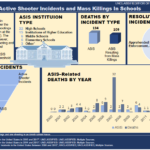
This Joint Intelligence Bulletin (JIB) is intended to provide information on the recent active shooter incidents that have taken place in the Homeland. This information is provided to support the activities of DHS and FBI and to assist private sector security officials and federal, state, local, tribal, and territorial law enforcement in identifying protective and support measures relating to active shooters.

FBI Bomb Data Center Bulletin: The Bomb Threat Challenge

January 7, 2013 in Federal Bureau of Investigation

As we enter an era in which the administration of law enforcement becomes more complicated, greater challenges are thrust not only upon police officials, but also upon the community at large. The bomb threat is one such challenge. The bomber has a distinct advantage over other criminals because he can pick his time and place from afar, and use the bomb threat as a weapon to achieve his criminal objectives. This bulletin has been prepared in order to provide law enforcement and public safety agencies with a working base from which to establish their own bomb threat response capability; and to enable these same agencies, when called upon by potential bomb or bomb threat targets in the business community, to offer assistance in developing guidelines for a bomb threat response plan.

(U//FOUO) DHS-FBI Radiological Terrorism Incident After-Action Reporting Guide

December 20, 2012 in Department of Homeland Security, Federal Bureau of Investigation

This Reference Aid was jointly produced by DHS and the FBI to assist in the acquisition of detailed information in the aftermath of a successful or attempted radiological terrorism incident that would be of interest to the national law enforcement and emergency response communities. It is intended to help state, local, tribal, and territorial agencies and private sector entities deter, prevent, preempt, or respond to terrorist attacks against the United States.

(U//FOUO) DHS-FBI Bulletin: Indicators of Suspicious Chemical, Biological, and Radiological Activity

December 19, 2012 in Department of Homeland Security, Federal Bureau of Investigation

Law enforcement and first responders may encounter chemical, biological, or radiological (CBR) related material or equipment at private residences, businesses, or other sites not normally associated with such activities. There are legitimate reasons for possessing such material or equipment, but in some cases their presence can indicate intent or capability to build CBR weapons, particularly when other suspicious circumstances exist.

(U//FOUO) DHS-FBI Suspicious Activity Reporting Bulletin: Theft/Loss/Diversion

December 17, 2012 in Department of Homeland Security, Federal Bureau of Investigation

Terrorists may attempt to steal or divert precursor materials, uniforms, identification, blueprints, documents, access cards, facility vehicles, or other items–possibly with the help of knowledgeable insiders–for use in pre-operational planning or attacks. Emilio Suarez Trashorras, a Spanish national convicted for his role in the 2004 Madrid train bombings, stole the explosives used in the attack and the vehicles used to transport the explosives from a mining company where he worked.

(U//FOUO) DHS-FBI Suspicious Activity Reporting Bulletin: Acquisition of Expertise

December 10, 2012 in Department of Homeland Security, Federal Bureau of Investigation

Terrorists may attempt to gain skills and knowledge necessary to plan and execute by obtaining specialized training, soliciting or stealing technical and proprietary information, or reaching out to academics and experts. In 2007, German police arrested three terrorist suspects for allegedly planning and preparing car bomb attacks against US citizens and interests in Germany. The suspects traveled to Pakistan where they received weapons and explosives training from a Pakistan-based Uzbek jihadist group called the Islamic Jihad Union.

(U//FOUO) FBI Cyber Alert: Unauthorized Access to a New Jersey Company’s Industrial Control System

December 8, 2012 in Federal Bureau of Investigation

In February and March 2012, unauthorized IP addresses accessed the Industrial Control System (ICS) network of a New Jersey air conditioning company, US Business 1. The intruders were able to access a backdoor into the ICS system that allowed access to the main control mechanism for the company’s internal heating, ventilation, and air conditioning (HVAC) units. US Business 1 was using the Tridium Niagara ICS system, which has been widely reported in the media to contain multiple vulnerabilities that could allow an attacker to remotely control the system.

(U//FOUO) DHS-FBI Suspicious Activity Reporting Bulletin: Observation/Surveillance

December 7, 2012 in Department of Homeland Security, Federal Bureau of Investigation

Terrorists often conduct physical surveillance to identify suitable targets, determine vulnerabilities, plan attack methods, or assess the target’s security posture. In March 2010, David Coleman Headley pled guilty for his role in the November 2008 terrorist attacks in Mumbai, India by conducting video and photographic surveillance of potential targets, as well as later surveilling Danish newspaper offices–the target of another attack plot.

(U//FOUO) DHS-FBI Suspicious Activity Reporting Bulletin: Photography

December 6, 2012 in Department of Homeland Security, Federal Bureau of Investigation

Terrorists and criminals may use photos or videos of potential targets to gain insight into security operations and details of facility operations, including traffic flow through and around facilities, opening times, and access requirements. In late 2000 and early 2001, convicted al-Oa’ida operative Dhiren Barot took extensive video footage and numerous photographs of sites in downtown New York City and Washington, DC in preparation for planned attacks. Photographs and video useful in planning an attack may include facility security devices (surveillance cameras, security locks, metal detectors, jersey walls and planters); security personnel; facility entrances and exits; and other features such as lighting, access routes, gates, roads, walkways, and bridges.

(U//FOUO) DHS-FBI Suspicious Activity Reporting Bulletin: Materials Acquisition/Storage

December 4, 2012 in Department of Homeland Security, Federal Bureau of Investigation

Terrorists overseas and in domestic attack plots have used various methods to acquire and store materials necessary to construct explosives. Najibullah Zazi, who pled guilty in 2010 to plotting to attack the New York subway system, made multiple, large-quantity purchases of chemical components needed to assemble the homemade explosive Triacetone Triperoxide (TATP)—6 bottles on one day and 12 bottles on a separate day—at beauty supply stores throughout the summer of 2009. Law enforcement and first responders should be aware that the possession, storage, or attempt to acquire unusual quantities of laboratory equipment, personal protective equipment, chemicals, and flammable accelerants—although legal to purchase and own—could provide indicators of preoperational attack planning.

(U//LES) FBI Sovereign Citizen Extremists Targeting Law Enforcement Creates Potential for Violent Traffic Stops

December 4, 2012 in Federal Bureau of Investigation

The FBI assesses with medium confidence, based on reliable source reporting and reports from other law enforcement agencies, some sovereign citizen extremistsb are making more specific plans to interfere with state and local law enforcement officers during traffic stops and, in some cases, intentionally initiating contact with law enforcement. The FBI assesses with medium confidence that a shift from reacting to law enforcement scrutiny1,2 to targeting police officers indicates an increased interest in harassing and intimidating police and may lead to potentially hostile confrontations.

(U//FOUO) DHS-FBI Bulletin: No Specific Threats to American Jewish Community, Despite Recent World Events

November 22, 2012 in Department of Homeland Security, Federal Bureau of Investigation

This Joint Intelligence Bulletin (JIB) provides law enforcement and private sector safety officials with an evaluation of potential terrorist threats to Jewish organizations, facilities, and personnel in the United states. The information is provided to support the activities of DHS and FBI and to assist federal. state, local, tribal, and territorial government counterterrorism and first responder officials to deter, prevent, preempt, or respond to terrorist attacks in the United States.