February 13, 2013 in North Atlantic Treaty Organization
Two re-occurring themes surface in after-action reports from exercises and operations. The first is that NATO Commanders and staffs naturally and increasingly turn to the Legal Advisers to help plan, execute, coordinate, evaluate, and support the assigned mission. The second is that no single doctrinal resource exists in NATO to assist legal practitioners in the fulfilling of this task. Although several Alliance members have produced such guides, before the NATO Legal Deskbook none existed for Legal Advisers and legal personnel assigned to NATO commands. Whether doctrinally ready or not, the Alliance calls upon NATO Legal Advisers and staffs to advise and, often, help direct the execution of the legal component of a mission or mandate. NATO owes these attorneys, paralegals, and legal personnel, who work under often austere and demanding conditions, practical guidance in the form of a comprehensive resource that provides an overview and insight on the legal regime that forms NATO practice. Fulfilling this need is the genesis, purpose and rational for this practitioner‘s guide.
Tags: North Atlantic Treaty Organization
January 18, 2013 in North Atlantic Treaty Organization
In 2008, recognizing a nascent requirement in the maritime security domain, CJOS COE was requested by NATO Allied Command Transformation (ACT) to provide an overall picture of Maritime Unmanned Systems (MUS) as a potential new capability, with a view to create an increased awareness and trigger further developments within the Alliance. The resulting MUS Study, published in November 2009, was then forwarded for endorsement by ACT, to the International Military Staff (IMS). Following this first document, CJOS COE has produced the attached Guidance document building on the initial study and aiming at supporting NATO MUS capability development.
Tags: Maritime Unmanned Systems, North Atlantic Treaty Organization, U.S. Navy, Unmanned Underwater Vehicles
November 28, 2012 in Featured
A collection of documents recently obtained and published by Public Intelligence provides a complete guide to NATO’s training process for “strategic communications” activities, including public diplomacy, public affairs, information operations and psychological operations. The documents, compiled for participants in a NATO training summit, describe the doctrine behind strategic communications and provide practical examples of their use in a number of recent conflicts from Libya to Afghanistan. These activities are designed to contribute “positively and directly in achieving the successful implementation of NATO operations, missions, and activities” as well as “influence the perceptions, attitudes and behaviour of target audiences . . . with the goal of achieving political or military objectives”.
Tags: Afghanistan, Kosovo, Libya, North Atlantic Treaty Organization, Psychological Operations, Strategic Communications
November 28, 2012 in North Atlantic Treaty Organization
The emphasis of military operations is shifting more and more towards non-kinetic activities, such as Psychological Operations and Information Operations, which are geared towards influencing attitudes and behaviors of specific target audiences. Though many such activities are undertaken, there is little systematic evaluation of the effects they bring about and their effectiveness. As a result, it is not well known what these operations contribute to the overall operation and to what degree they are achieving their goals. The purpose of the Task Group HFM-160 was to develop a systematic approach to the Measurement Of Effectiveness (MOE) of influence operations.
Tags: North Atlantic Treaty Organization, Psychological Operations, Strategic Communications
November 7, 2012 in North Atlantic Treaty Organization
NATO recognises that that the military alone cannot resolve a crisis or conflict. There is a need for more deliberate and inclusive planning and action through established crisis management procedures that allow for both military and non-military resources and efforts to be marshalled with a greater unity of purpose. Adopting such a comprehensive approach to operations begins with inculcating a culture of active collaboration and transparency among those involved in crisis management.
Tags: North Atlantic Treaty Organization
November 1, 2012 in North Atlantic Treaty Organization
The need to communicate effectively with a wide range of audiences is not just desirable, it is essential to gain understanding and support for NATO’s operations. Public support for NATO’s missions and tasks follows from public understanding of how the Alliance makes a difference to international peace and security. Public confidence, in turn, is enhanced by NATO’s ability to achieve its mandate in a way that is open, transparent. and consistent with member nation values and expectations.
Tags: North Atlantic Treaty Organization, Public Affairs, Strategic Communications
October 27, 2012 in Afghanistan, North Atlantic Treaty Organization
NATO/ISAF engagement in Afghanistan in 2010 was characterised by a refreshed, comprehensive civ-mil strategy as reflected in a substantial force uplift, significant progress in the growth and development of the Afghan National Security Forces, and discernable campaign progress in priority districts. These were reflected in the NATO/ISAF Strategic Communications Framework 2010. In parallel, political events, including the London Conference, the Consultative Peace Jirga, the Kabul Conference, Afghan Parliamentary elections and the NATO Summit in Lisbon, helped define a clear political roadmap for Afghanistan. These developments are reflected in the Lisbon Summit Declaration which provides political guidance for the focus of our efforts in 2011 and reaffirms that NATO’s mission in Afghanistan remains the Alliance’s key priority.
Tags: Afghanistan, International Security Assistance Force, North Atlantic Treaty Organization, Strategic Communications
October 26, 2012 in North Atlantic Treaty Organization
The mission of KFOR as authorised by the North Atlantic Council (NAC) is to contribute to a safe and secure environment in Kosovo and to support the development of security institutions capable of operating without NATO assistance. The adaptation of KFOR’s force posture during 2010 and its unfixing from Properties with Designated Special Status have been supported by an effective strategic communications (StratCom) approach which has been closely coordinated at all stages throughout the NATO chain of command and NATO HQ. Continued StratCom efforts will be required to complement and support military and civilian activities during 2011 as KFOR’s footprint and posture continues to adapt and as progress is made toward mission achievement.
Tags: Kosovo, North Atlantic Treaty Organization, Strategic Communications
October 26, 2012 in North Atlantic Treaty Organization
OPERATION OCEAN SHIELD was launched by the North Atlantic Council on 17 August 2009. NATO is conducting counter-piracy activities as part of an internationally recognised and supported effort in a region of strategic interest to the Alliance. NATO’s commitment is as a complementary player in coordination with the other international counter-piracy actors including the EU’s Operation ATALANTA, CTF-151, and individual nations.
Tags: North Atlantic Treaty Organization, Piracy, Strategic Communications
October 26, 2012 in Libya
A coordinated and integrated StratCom approach to support NATO action in response to events in Libya is key to achieving the Alliance’s overall objective. Managing the information domain will be critical to NATO’s efforts being understood – and ultimately supported – by the audiences. It will require the use of the full range of information and communication capabilities, in line with NATO policies and authorities establishing an appropriate level of NATO visibility will be important to ensure unity of message, to manage and shape perceptions, to counter potential misinformation and to build public support.
Tags: Libya, North Atlantic Treaty Organization
October 25, 2012 in North Atlantic Treaty Organization
All aspects of NATO activities have a critical information and communications component. This concept proposes that Strategic Communications is not an adjunct activity, but should be inherent in the planning and conduct of all military operations and activities. As part of the overarching political-military approach to Strategic Communications within NATO, the vision is to put Strategic Communications at the heart of all levels of military policy, planning and execution, and then, as a fully integrated part of the overall effort, ensure the development of a practical, effective strategy that makes a real contribution to success.
Tags: North Atlantic Treaty Organization, Strategic Communications
October 25, 2012 in North Atlantic Treaty Organization
Today’s information environment, characterized by a 24/7 news cycle, the rise of social networking sites, and the interconnectedness of audiences in and beyond NATO nations territory, directly affects how NATO actions are perceived by key audiences. That perception is always relevant to, and can have a direct effect on the success of NATO operations and policies. NATO must use various channels, including the traditional media, internet-based media and public engagement, to build awareness, understanding, and support for its decisions and operations. This requires a coherent institutional approach, coordination of effort with NATO nations and between all relevant actors, and consistency with agreed NATO policies, procedures and principles.
Tags: North Atlantic Treaty Organization, Strategic Communications
October 22, 2012 in North Atlantic Treaty Organization
The current transatlantic environment will continue to challenge NATO’s ability to carry its messages proactively and engagingly to diverse audiences across the globe, but it also entails a number of positive trends on which NATO’s future communication efforts should build. From a broader perspective, the public climate in Europe and North America has recently become more supportive of a close transatlantic security relationship compared to previous years. As the 2009 Transatlantic Trends survey shows, the Alliance has regained public support in many, albeit not all Allied countries. Moreover, NATO’s 60th anniversary, the NATO Summit in Strasbourg/Kehl, the arrival of a new Secretary General in late summer and the launching of a public debate about NATO’s new Strategic Concept have spurred broader public attention and interest in the Alliance.
Tags: North Atlantic Treaty Organization, Strategic Communications
October 19, 2012 in North Atlantic Treaty Organization
The role of Psychological Operations (PSYOPS) is to induce or reinforce the perceptions. attitudes and behaviour of North Atlantic Council (NAC) approved audiences in support of Alliance political and military objectives. Additionally, PSYOPS can mitigate the effective use of hostile propaganda against friendly forces, local civilian audiences and other audiences of importance to NATO.
Tags: North Atlantic Treaty Organization, Psychological Operations, Strategic Communications
October 19, 2012 in North Atlantic Treaty Organization
The purpose of Allied Joint Publication (AJP)-3.10.1 Allied Joint Doctrine for Psychological Operations is to address the planning and conduct of military PSYOPS in support of NATO activities. PSYOPS, as one of the key contributors to most information operations (INFO OPS) activities, will achieve their greatest effect when coordinated within the larger INFO OPS plan and supporting a much broader information strategy. The new construct of INFO OPS is focused on affecting will, understanding, and capability through the three activities of influence, counter-command, and information protection. It must be noted that PSYOPS has influence activity as its mission; and by influencing target audiences (TA) directly, PSYOPS, in turn, has indirect effects on understanding and capability.
Tags: North Atlantic Treaty Organization, Psychological Operations
October 16, 2012 in North Atlantic Treaty Organization
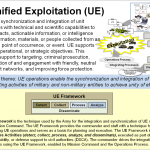
The aim of this reference book is to provide the additional information needed by Information Operations (Info Ops) practitioners to better understand and implement the advising and coordinating function of Info Ops in the staffs throughout all levels of command. The reference book covers the experiences and lessons learned on principles, procedures, and techniques in current operations as well as some basic understanding on how to best integrate the Info Ops function in the new evolving structures (new Peacetime Establishment) and procedures within NATO with respect to effects based thinking and the new Comprehensive Operations Planning Directive.
Tags: Information Operations, North Atlantic Treaty Organization, Strategic Communications
October 16, 2012 in North Atlantic Treaty Organization
The Information Environment (IE) comprises the information itself, the individuals, organizations and systems that receive, process and convey the information, and the cognitive, virtual and physical space in which this occurs. This environment has seen significant changes in recent years. The importance of worldwide distributed information, the speed at which information is communicated, the role of social media and the reliability of information systems have created a situation in which no Alliance decision or action can be taken without considering its potential impact on the IE. The ubiquitous nature of information and the potential strategic ramifications of tactical actions add to the challenge faced by NATO Commanders. In this new IE it is more difficult to distinguish between the strategic, operational and tactical levels. The coordination, synchronisation and execution of information activities (IA) that deliberately create desired effects in the IE is essential to the Alliance’s successful functioning in peace, crisis and conflict.
Tags: Information Operations, North Atlantic Treaty Organization, Strategic Communications
October 16, 2012 in North Atlantic Treaty Organization
The purpose of Allied Joint Publication (AJP)-3.10 Allied Joint Doctrine for Information Operations is to explain how Info Ops support the planning, conduct and assessment of operations. The provenance for AJP-3.10 is MC 422/3 NATO Military Policy on Information Operations, which clearly acknowledges the primacy of civil/political direction on information issues and that the policy and subordinate doctrine applies to the military lever of power only. AJP-3.10 is focused on the operational level. It defines and discusses principles of Info Ops, and highlights those particular Info Ops considerations relevant to the conduct of operations, such as the sensitivity to political factors, and the role of non-military entities and emerging technological capabilities in the information environment, both within and external to NATO.
Tags: Information Operations, North Atlantic Treaty Organization, Strategic Communications
September 11, 2012 in Featured
The problem of civilian casualties in Afghanistan has presented substantial tactical difficulties for coalition forces according to a recent U.S. Army handbook. Produced by the Center for Army Lessons Learned (CALL) and released to soldiers on a restricted basis in June, the handbook presents best practices for reducing civilian casualties (CIVCAS) and offers strategies for mitigating negative effects from casualties among local populations.
Tags: Afghanistan, Civilian Casualties, For Official Use Only, North Atlantic Treaty Organization, U.S. Army
September 11, 2012 in Afghanistan, U.S. Army
The U.S. military has long been committed to upholding the law of armed conflict and minimizing collateral damage. This includes the killing or wounding of noncombatant civilians — described in this handbook as civilian casualties or CIVCAS — as well as damage to facilities, equipment, or other property. Due to several factors, the impact of CIVCAS has increased to the point that single tactical actions can have strategic consequences and limit overall freedom of action. These factors include: the increased transparency of war, where tactical actions can be recorded and transmitted worldwide in real time; increased expectations for the United States’ conduct of war in light of improved precision and overall capabilities; and the enemy exploitation of CIVCAS to undermine U.S. legitimacy and objectives.
Tags: Afghanistan, Center for Army Lessons Learned, Civilian Casualties, For Official Use Only, International Security Assistance Force, North Atlantic Treaty Organization
September 7, 2012 in Afghanistan, North Atlantic Treaty Organization
Despite the continuous counter-narcotics efforts of the international community and the Afghan government throughout the past decade, Agence France-Presse wrote in April 2012 that Afghanistan continues to be a major contributor to the global drug supply. Approximately 90% of the world’s opium, most of which is processed into heroin, originates in Afghan fields. While potential opium production in Afghanistan peaked in 2007, poppy cultivation has recently risen. For instance, the United Nations Office on Drugs and Crime (UNODC) marked a 61% increase in the potential opium production between 2010 and 2011. A separate UNODC report from 2010 states that drugs and bribes are equivalent to approximately a quarter of Afghanistan’s gross domestic product (GDP).
Tags: Afghanistan, Drug Trafficking, North Atlantic Treaty Organization, Opium, Pakistan, Taliban
May 31, 2012 in North Atlantic Treaty Organization
The term Peace Support Operations is now widely used by many civilian agencies to describe their activities in complex humanitarian emergencies. PSOs are multi-functional operations, conducted impartially, normally in support of an internationally recognised organisation such as the UN or Organisation for Security and Co-operation in Europe (OSCE), involving military forces and diplomatic and humanitarian agencies. PSO are designed to achieve a long-term political settlement or other specified conditions. They include Peacekeeping and Peace Enforcement as well as conflict prevention, peacemaking, peace building and humanitarian relief.
Tags: North Atlantic Treaty Organization, Peacekeeping
May 31, 2012 in North Atlantic Treaty Organization
AJP-3.4.4 provides a common NATO doctrine to guide commanders, staffs and forces engaged in the conduct of COIN. It also informs civil actors involved in security and stabilisation of the full range of capabilities that the military may contribute to a joint, interagency and multinational response to the resolution of such ‘wicked problems’.
Tags: Counterinsurgency, North Atlantic Treaty Organization
May 20, 2012 in Headline
Paul Weiskel – http://www.flickr.com/photos/pweiskel08/
niXerKG – http://www.flickr.com/photos/kgnixer/
Chicago Man – http://www.flickr.com/photos/usachicago/
WBEZ – http://www.flickr.com/photos/chicagopublicradio/
Tags: Chicago, North Atlantic Treaty Organization
May 19, 2012 in Illinois
Debra Kirby, chief of the Chicago Police Department Office of International Relations, said it is not the intent of Chicago Police to limit or otherwise interfere with coverage of protests and other events related to the NATO summit. The department anticipates that members of the media will be accompanying protesters. Kirby said the department is not endorsing a formal embedding policy (reporters/crews will not be assigned to tag along with specific police units). The department is cognizant that not everyone covering the protests has a NATO or Chicago Police credential. Kirby said credentials from other jurisdictions will be honored, and she recommends that they be worn on a lanyard. At the same time, she is also aware that those who did so in New York encountered problems from protesters; doing so in such circumstances is a judgment call. If there is any question, reporters will be allowed to pull credentials from their pockets to show to police on the street. Information will be released through two joint incident command centers, effective Friday.
Tags: Chicago, Illinois, North Atlantic Treaty Organization