December 19, 2012 in Department of Homeland Security, Federal Bureau of Investigation
Law enforcement and first responders may encounter chemical, biological, or radiological (CBR) related material or equipment at private residences, businesses, or other sites not normally associated with such activities. There are legitimate reasons for possessing such material or equipment, but in some cases their presence can indicate intent or capability to build CBR weapons, particularly when other suspicious circumstances exist.
Tags: Biological Warfare, Chemical Warfare, Department of Homeland Security, Federal Bureau of Investigation, For Official Use Only, Suspicious Activity Reporting
November 14, 2012 in Department of Homeland Security, Federal Bureau of Investigation
Terrorist groups, including al-Qa‘ida, and violent extremists have considered using or have possessed cyanide compounds. Cyanides probably appeal to terrorists because of their toxicity, availability, and ease of dissemination. Some of the cyanide tactics that have been considered by terrorists include mixing it with oils and lotions for use as a contact poison, contaminating food or water supplies, or by using it in an improvised chemical dispersal device.
Tags: Chemical Warfare, Department of Homeland Security, Federal Bureau of Investigation, For Official Use Only
September 13, 2012 in U.S. Army
This drill book provides platoon, squad, and team leaders with standardized drills that are designed for use by trainers at the platoon and squad level. Standardized drills are essential to the success of platoon leaders, trainers, and small-unit leaders. These drills provide the performance measures, standards, and sequential procedures that will help guide the unit through training tasks for which doctrine is just now being developed. Chemical Corps platoons and squads must be able to perform these drills quickly, effectively, and to standard at all times.
Tags: CBRNE, Chemical Warfare, Distribution Restricted, Nuclear Weapons, U.S. Army
May 26, 2012 in U.S. Army
This publication describes ARSOF CBRN missions and tasks for the chemical reconnaissance detachment (CRD), chemical decontamination detachments (CDDs), ARSOF CBRN reconnaissance and survey operations, decontamination and reconnaissance teams (DRTs), and ARSOF sensitive site exploitation (SSE), and discusses reachback capability. This publication provides a basis for understanding the requirements of individual special operations forces (SOF) personnel operating in CBRN environments, as well as the requirements of ARSOF staff planners across the range of military operations. The manual also provides guidance for commanders who determine force structure, equipment, material, and operational requirements necessary to conduct SOF CBRN missions described herein.
Tags: CBRNE, Chemical Warfare, Distribution Restricted, Nuclear Weapons, U.S. Army
February 23, 2012 in Federal Bureau of Investigation
The release of a toxic industrial chemical (TIC) by a terrorist group or lone actor represents a significant threat. TICs are readily available in large quantities, routinely shipped by commercial carriers, and often stored in bulk containers. Most TICs are generally less toxic than chemical warfare (CW) agents, but a large volume of TICs can be equally dangerous. The release of a TIC in a populated area is capable of generating numerous casualties and deaths; the toxic effects would be more dangerous if release occurred in an enclosed space.
Tags: Chemical Warfare, Domestic Terrorism, Federal Bureau of Investigation, For Official Use Only, Terrorism
May 19, 2011 in Department of Homeland Security, Intelligence Fusion Centers
The purpose of this assessment is to assist members of the law enforcement and public safety communities in differentiating among four types of clandestine laboratories: biological, chemical, explosives, and methamphetamine. It provides descriptions, distinguishing features, and hazards of each type of laboratory and includes four reference guides for distribution to public safety personnel. This assessment expands on a related product—Distinguishing a Biological Agent Production Laboratory from a Methamphetamine Laboratory, Lawrence Livermore National Laboratory, 22 January 2008—by including indicators and warning signs associated with clandestine chemical and explosives laboratories.
Tags: Biological Warfare, Chemical Warfare, Department of Homeland Security, Domestic Terrorism, Methamphetamine
January 4, 2011 in Federal Bureau of Investigation
An article in the second issue of the English-language jihadist magazine “Inspire” emphasizes the use of weapons of mass destruction (WMD); however the article did not provide specific instructions. In the article entitled “Tips for Our Brothers in the United Snakes of America,” the author encourages those with microbiology and chemistry degrees to develop biological or chemical toxins such as botulism, ricin, or cyanide. WMD was referred to as the “next stage… [in] the war with America.” It is also stated in the article that upcoming issues of “Inspire” will cover WMD in greater detail.
Tags: Chemical Warfare, Federal Bureau of Investigation, Law Enforcement Sensitive, Weapons of Mass Destruction
November 29, 2010 in Department of Homeland Security, Federal Bureau of Investigation
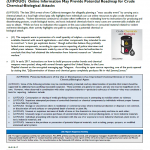
(U//FOUO) Terrorists have shown considerable interest in an improvised chemical device called the mubtakar, which is designed to release lethal quantities of hydrogen cyanide, cyanogen chloride, and chlorine gases. One or more devices could be used in attacks in enclosed spaces, such as restaurants, theaters, or train cars. The mubtakar is small and could be transported in a bag or box, or assembled at the attack site. DHS and FBI encourage recipients of this document to report information about suspicious devices and the acquisition or possession of mubtakar precursor chemicals or components (see figures for details) to the nearest state and local fusion center and to the local FBI Joint Terrorism Task Force.
Tags: Chemical Warfare, Department of Homeland Security, Domestic Terrorism, Federal Bureau of Investigation, For Official Use Only, Terrorism
January 22, 2010 in U.S. Army Corps of Engineers
The former Orlando AAF, Toxic Gas and Decontamination Yard is located approximately three miles northeast of the Orlando International Airport, east of the City of Orlando, in Orange County, Florida.
Tags: Chemical Warfare, Florida, For Official Use Only, U.S. Army Corps of Engineers
June 19, 2009 in News
An inventory of potentially deadly pathogens at Fort Detrick’s infectious disease laboratory found more than 9,000 vials that had not been accounted for, Army officials said yesterday, raising concerns that officials wouldn’t know whether dangerous toxins were missing. After four months of searching about 335 freezers and refrigerators at the U.S. Army Medical Research Institute of Infectious Diseases in Frederick, investigators found 9,220 samples that hadn’t been included in a database of about 66,000 items listed as of February, said Col. Mark Kortepeter, the institute’s deputy commander.
Tags: Anthrax, Biological Warfare, Chemical Warfare, Fort Detrick, Ineptitude, USAMRIID